Investigate identity, emotion, and society with our exciting English Literature degree
Study English Literature at St Mary's London to deepen your love of stories, discover new voices, and build career-ready skills through coursework grounded in real-world application. As an English Literature student, you'll engage in these skills by reading across genres, geographies, and time periods and learning to develop skills in critical thinking, collaboration, communication, and creativity which will enable you thrive in the world beyond university.
The three pillars of our approach at St Mary’s focus on how:
- The ‘Humanities’ ignite possibility. In our English Literature courses, you’ll develop strong foundations in a subject you love and develop your critical understanding of the discipline.
- The ‘Humanities’ promote individual and collective flourishing. Your courses will empower you to be creative, engage, and develop cultural and artistic appreciation and expression.
- The ‘Humanities’ for Future Challenges. As an English Literature student you will be able to consider how your studies can be applied to a fast-changing world.
Our BA degree programme is designed to give you a comprehensive understanding of the history and development of literatures in English, covering topics and questions such as:
- What is the relationship between English renaissance history, poetry and theatre?
- To what extent is Gothic literature ‘subversive’ and why does that matter today?
- How did conceptions of gender develop from the nineteenth to the twentieth centuries in the novel?
- What is the relationship between senses and feelings in literature of the twentieth and twenty-first centuries?
- How does contemporary literature offer insight into who we are and the world around us?
Study amid vibrant literary history
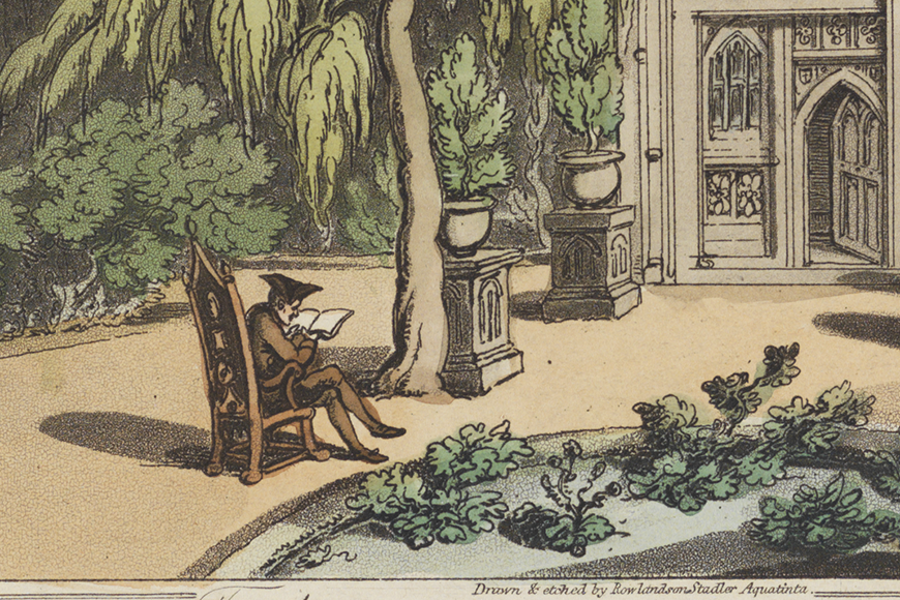
St Mary’s shares its campus with Strawberry Hill House, the home of the Gothic imagination where Horace Walpole wrote the first Gothic novel, The Castle of Otranto. Our BA in English Literature focuses on the humanities as an applied subject which is used to communicate knowledge across a range of media and contexts, and the course offers opportunities to work in collaboration with local heritage institutions.
Learn through real-world partnerships
Through various partnerships we hold in the humanities, you'll have the opportunity to see real-life applications of your learning through field visits and engaging assessments and in-class activities. Together we work to enhance your capacity to analyse literary sources and communicate your ideas, while encouraging you to consider the ways in which literature connects with other forms of media and offers insight into the contemporary world.
Expert teaching and support
St Mary’s English Literature is a close-knit community which supports students to express their own ideas, explore their creativity, and realise their ambitions. You'll learn in small seminar groups which emphasise discussion and debate as well as knowledge exchange. You'll be taught by literary specialists with expertise in a wide range of subject areas.
Learn in the capital
Studying at St Mary's gives you access to London's diverse literature scene and world-renowned libraries. You can visit places like:
- The British Library
- Shakespeare’s Globe
- The Sherlock Holmes Museum
- The George Inn
- Charles Dickens Museum.
Employability
of graduates are in employment, vocation or further study within 15 months of graduation (HESA, 2024)Safest university
in England and Wales (Complete University Guide, 2024)Student experience
in the UK (The Sunday Times Good University Guide, 2024)Career opportunities
Our English Literature degree will help you develop essential transferable skills such as critical thinking, creativity, research, project planning, group work, presenting, and communication.
When you start your course at St Mary's, you'll have access to our Career Services, which provides students and graduates with impartial advice on their career progression and development.
Some examples of job roles and areas of work for graduates of English Literature BA (Hons) include:
Chat to us

Chat to us
Applying to university can be daunting, and you may have questions about applying, student life, or your course.
Course content
Modules
At St Mary's University we promote an interdisciplinary approach to the humanities, and this is an important and unique part of our offer.
Unlike other humanities degrees, if you choose to study English at St Mary's, you can expand your knowledge by exploring modules across creative writing, history, liberal arts, theology, education studies, and film.
Please note: it is possible that a module listed on the website will not be able to run due to reasons beyond our control. For more information please refer to our course information disclaimer.
How the degree is taught
Teaching methods
You'll be taught on our beautiful and historic campus located in Twickenham, London.
During your English Literature course, you will attend lectures, interactive seminars, and one-to-one tutorials, the latter of which we place a great deal of importance on.
In your first year you can expect 10 contact hours a week.
Throughout your studies, you will have access to the department's 'open door policy' that allows you to come and discuss questions, and interests, with your tutors outside of formal teaching.
The ‘Special Study’ option in the third year asks you to undertake an enterprising project to engage applied humanities on a literary topic guided by your lecturer. You engage creatively to produce a project such as a walking tour; curate an exhibition or a season of films; or create an educational website.
- Contact time
- 20%
- Independent study
- 60%
- Guided learning
- 20%
Assessment methods
Most of the modules are assessed with essays and other written forms, supplemented, where appropriate, with examinations, presentations, and contributions to digital content such as blogs, wikis and the like.
Feedback
We adhere to the university’s policy of providing feedback on assessments within 15 working days.
Who teaches this course?
Entry requirements
2026 to 2028 entries
Start date
Standard offer
112 UCAS points
Contextual offer
96 UCAS points
About Contextual Offer:
Not sure about your grades? We consider all factors when reviewing your application, as we know not everyone has the same support to reach their potential. So we may make a contextual offer below the standard Tariff if you meet our criteria. Read more about contextual offers.
One A-level should ideally be in English (either Language or Literature), but we may be able to consider applicants who are doing at least one other essay-writing subject and can demonstrate an interest in English.
We understand that sometimes barriers you can't control get in the way of academic achievement. You are more than just your grades. We'll consider your application as a whole, taking into account things like:
- subjects studied at Level 3
- your GCSEs (or equivalent) profile
- non-academic achievements you mention in your personal statement
- your references and motivation.
Fees & funding
September 2026
Home
£9,790
International
£17,445
*Please note: Tuition fee increases for undergraduate Home students are subject to regulatory control by the UK Government. The above Home fees for September 2026 are confirmed by the UK Government subject to Parliamentary procedure in early 2026. These fees are annual and may increase as detailed in our tuition fee variation disclaimer.
For more information on foundation year fees for home students, please check the details on our tuition fee page.
For more information about whether you are likely to pay home or international fees, please visit our 'understanding your tuition fee status' page.
Information about tuition fees, student loans, and funding your studies can be found within our fees and funding section.
Scholarships
Find out more about our range of scholarships and bursaries available to undergraduate students.
Living costs
A guide to your living costs has been created by our Student Funding Team.
Accommodation costs vary depending on whether you opt for an en suite room and on-site catering. Take a look at our accommodation options and the prices you can expect to pay.
Apply now
Interested in applying through Clearing?
Call our Clearing hotline: +44 20 8240 4225. We're also on live chat, ready to help you with your Clearing journey, or you can contact us directly on WhatsApp: +44 7360 538225.
Not sure yet? Find out more about Clearing 2026 at St Mary's.
If you're currently living in the United Kingdom and Ireland, you'll need to apply directly through UCAS. You can check our step-by-step application guide for detailed information. You will also need to apply directly if you want to study any course part-time.
If you're an international student and you would like to apply for Foundation and Placement Year courses, you can submit an application directly or add St Mary's University as a choice on UCAS. Check our guideline for more information.
September
Transferring from another institution?
St Mary's is happy to consider applications from students who wish to transfer from another university. If this is you, please follow these instructions. Please note: we do not currently accept transfers into our LLB courses.
You may also be interested in:
More from St Mary's
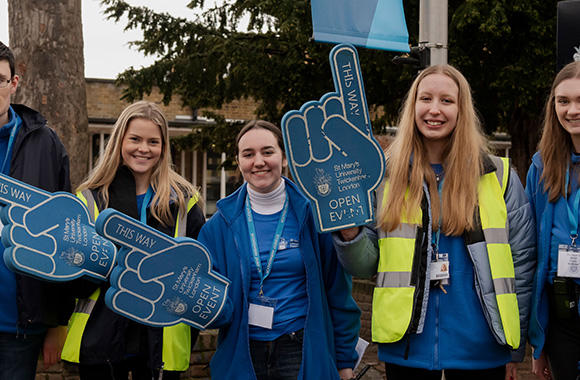
Thinking about whether St Mary's is the right place for you? Come and visit it us on campus.

Find out more about the extensive support system available to you at St Mary’s.
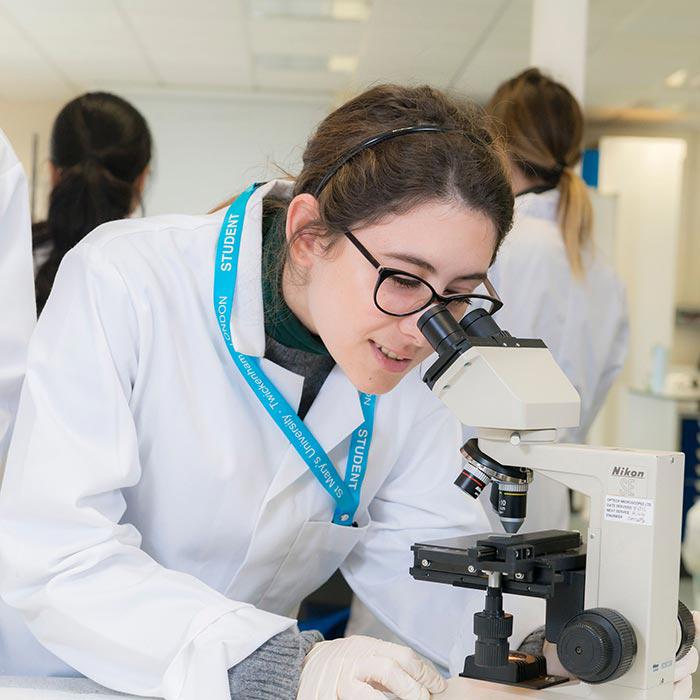
Discover the many areas in which our academies are currently researching.

Discover what life is like on our London campus.