
Considering commuting to St Mary's University? In this post, Student Ambassador Kesha gives you the lowdown on public transport in London.
As a university student, you have the option to stay in the university accommodation, or commute to university. I decided to do the latter throughout my three years as an undergraduate student, so I accumulated a lot of experience in the field.
There are many ways in which you can commute to St Mary’s, from buses and the Tube to cycling and trains. St Mary’s is very accessible!
In this blog post, I share what I’ve learnt through my time as a commuter at university.
Public transport options in London
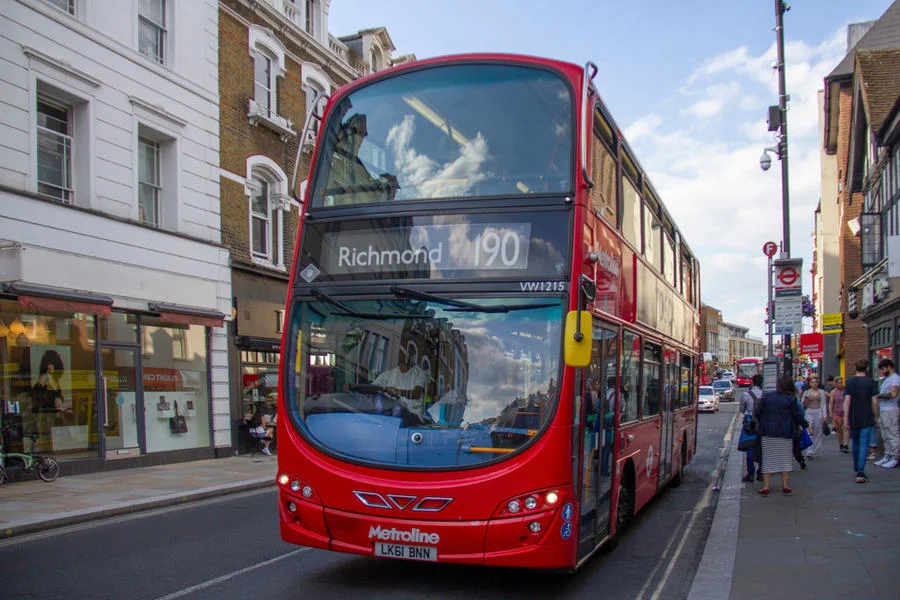
Bus
There is a main bus line that connects St Mary’s and Richmond. The 33 is a direct 20-minute bus ride that stops right in front of campus.
You can also get buses from Hounslow, which provide easy access to Twickenham High Street, and from there, it's a 15-20-minute walk to the University.
There is also a Superloop bus that stops in Teddington: the SL7. Superloop buses have limited stops and provide a quick route within outer London. From Teddington, it’s then only a 15-minute walk to the University.
Train
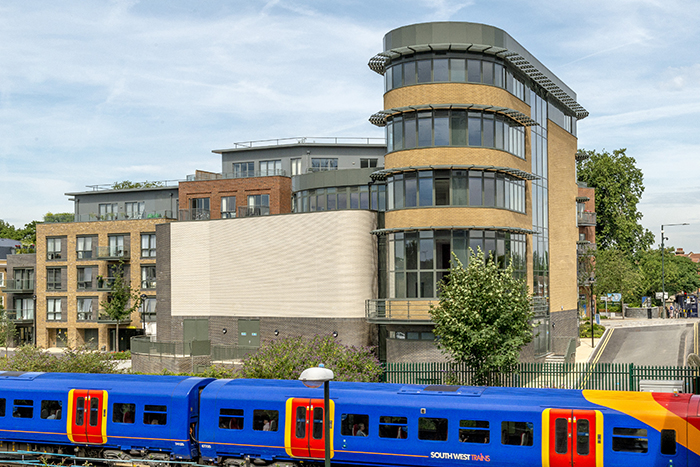
Strawberry Hill station is less than a five-minute walk from campus, with direct South Western Railway trains to London Waterloo in central London.
You can also get trains from Teddington and Twickenham stations, and from Twickenham you can catch a fast train that only stops at key stations on the way to central London.
London Waterloo has connections to Southampton, Bournemouth, Exeter, Reading, Windsor, and so many more places.
Underground/The Tube
From Richmond, you can take the District line or the London Overground's Mildmay line, giving you easy access to places like Westminster and Stratford.
Lime and other bikes
Electric bike services like and are very popular among students to travel locally around the area.
To use these electric bike services, you need to download an app which corresponds to the brand of the electric bike service and provide a payment method.
Then, the app allows you to find where the nearest electric bike is located, and you can book it on the app. To help you find your bike, it will make a ringing noise. Once you have finished your journey, make sure you end your ride in the app, and payment will be taken once the journey is completed.
Air travel
St Mary’s University is a 30-minute drive from Heathrow Airport, which is handy for international travel – especially for international students.
You can get the SL7 bus to Hatton Cross Station and then hop on the Piccadilly line for one stop to arrive at Heathrow Airport in less than an hour, or get the 490 bus from Twickenham Green that takes you all the way to the airport in just over an hour.
You can get to Gatwick Airport by train in just under an hour and a half.
How can you pay for public transport in London?
You can't pay with cash on London buses, so you'll need to tap in with either an Oyster card or a contactless bank card or phone. On the Tube and trains, tap the yellow card reader at the start and end of every journey and the fare will be charged to your card. On buses, you only need to tap in.
It's best to stick to the same card or phone all day though. If you switch between your phone and your bank card, they're counted as two different payments, so you won't get the benefit of the daily cap.
You can also buy paper tickets at stations, but these usually cost a lot more than paying as you go.
How much does public transport in London cost?
How much you pay depends on how you travel and which zones you go through. St Mary's is in Zone 6, so if you're heading into central London, you'll be crossing quite a few zones.
Buses are the cheapest option. Every bus journey costs the same flat fare, however far you go. With the Hopper fare, you can also change buses as many times as you like within an hour of touching in, all for one fare.
On the Tube and trains, the price depends on how many zones you travel through and whether you're travelling at peak time. Off-peak is usually cheaper, so if your timetable lets you travel later in the morning, it's worth doing.
The best part is the daily cap. Once your fares for the day reach the cap for your zones, any more journeys that day are free. There's also a weekly cap that runs from Monday to Sunday, which really helps if you're commuting most days. Buses have their own, lower cap if they're all you use.
To check the exact cost of your journey, use It shows you the up-to-date price between any two stations.
London transport passes
If you're travelling to campus most days, it's worth looking at a pass rather than paying for each journey.
The gives you 30% off Travelcards and bus & tram pass season tickets. You apply online through TfL, St Mary's confirms that you're a student, and you pay a one-off fee for the card.
If you're under 26 (or a mature student in full-time education), you can also get a . Link it to your Oyster card and you'll get a third off off-peak pay as you go fares, and lower off-peak daily caps too.
Is it cheaper to use Oyster card or contactless in London?
For most journeys, they cost exactly the same. Both use pay as you go fares and both have daily and Monday to Sunday weekly caps.
The difference is in the discounts. You can only add a Railcard or Student Oyster discount to an Oyster card – not to your bank card or phone. So if you're commuting regularly, Oyster will usually work out cheaper.
Contactless is handy if you only travel now and then, as you don't need to buy a card or top it up.

Top tips for commuting students
Here are some tips I would give you as a commuting student:
- Link your 16–25 Railcard to your Oyster card to get ⅓ off off-peak travel.
- Travel at off-peak times when you can, as it is quieter and cheaper.
- Fares are capped at a daily limit, so once you hit it, the rest of your travel that day is free.
- Download apps for the most accurate arrival times. Some apps I'vee used throughout my time at university are , , and .
Thinking about commuting to St Mary's?
From our commuter lounge to tips on meeting other students, find out how . You can also check out our for further advice on getting to campus by bus, train, bike and more.