
With newly elected MP Andy Burnham calling for more devolution across England, Charley Dugdale, Associate Head – Law at St Mary’s University, explains what this means, why it matters and what the law actually says.
Every day we're surrounded by headlines about political announcements, new laws and court decisions. We hear politicians debating policies, journalists analysing the latest developments and commentators offering their opinions.
Yet behind many of these stories, lies an important legal point that often goes unexplained.
The aim of this article is not to tell you what to think about devolution, but to explain what it is, why it matters and what the law actually says.
What's happened?
If you've been following the news recently, you may have heard former Mayor of Greater Manchester and newly elected MP Andy Burnham, has called for more devolution across England. For many people, that raises an obvious question: What does devolution actually mean?
It's not surprising if you're unsure. It's one of those political and legal terms that is used regularly but rarely explained. At its simplest, devolution is about who gets to make decisions.
Currently, many important decisions affecting England are made by the UK Government. Andy Burnham's argument is that more of those decisions should instead be made by leaders closer to the communities they serve.
Whether you agree with him or not, it raises an interesting legal question about where power should sit.
Why does law come into this?
As a law academic, one of the questions I'm most often asked is why constitutional law matters. Unlike criminal law or family law, it can sometimes feel distant from everyday life. In reality, constitutional law is simply about who has the power to make decisions.
Imagine a large organisation with a head office and local branches. Head office sets the overall strategy, direction, and budget while local branches make decisions that affect the communities they know best. Devolution works in a similar way way.
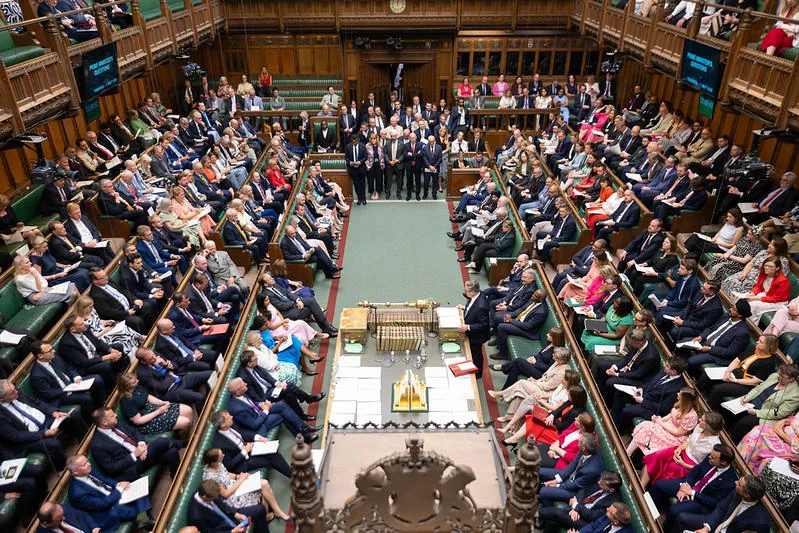
The UK Parliament, based in Westminster, remains responsible for making laws for the country as a whole. However, over time Parliament has decided that some decisions are better made closer to the people they affect. That means responsibility for certain areas has been passed to other governments and regional authorities.
Scotland, Wales and Northern Ireland each have their own legislatures with responsibility for many domestic issues.
England has taken a different approach. Instead of creating its own parliament, powers have gradually been given to regional authorities led by directly elected mayors. These mayors cannot simply make whatever laws they wish. Parliament decides which powers they have and the areas for which they are responsible.
Importantly, Parliament has not given away its authority. It remains the UK's supreme law-making body and can change how devolution operates in the future.

What does that look like in practice?
The easiest way to understand devolution is to look at London. Most people know that London has a mayor. What many people don't realise is that the mayor is responsible for a wide range of decisions affecting everyday life.
For example, the mayor oversees , which manages the Underground, London's buses, trams and many major roads. The mayor also has responsibilities relating to policing, housing, strategic planning and economic development. This means that many decisions affecting daily life for Londoners are made in London rather than by the UK Government.
The same principle is now being applied in other parts of England through elected regional mayors. Greater Manchester, for example, has used devolved powers to develop the , bringing together buses, trams, cycling and walking routes under one integrated transport system.
Why is everyone talking about it now?
Andy Burnham has argued that regional leaders should have even greater responsibility for decisions affecting their areas, including housing, transport, skills and economic growth. Supporters believe local leaders are often better placed to understand the needs of their communities and can respond more quickly to local challenges. Others believe greater local decision-making could lead to increasing differences between regions in the way public services are delivered.
Those are political arguments. The legal question underneath them is much simpler: Who should have the legal authority to make decisions that affect our everyday lives?
Why should we care?
It's easy to think constitutional law only matters to politicians, lawyers or academics. In reality, it affects all of us because it tells us:
- Who decides where new homes are built?
- Who decides whether your local buses improve?
- Who decides how money is invested in your town or city?
- Who decides what adult education and training opportunities are available where you live?
Increasingly, the answer to some of those questions may not be the UK Government, but leaders much closer to home. That is why devolution matters.
Looking beyond the headlines
As a law academic, one of the things I enjoy most is looking beyond the headlines to understand the legal principles shaping the stories we hear every day.
Whether the issue is devolution, online safety, sentencing reform or artificial intelligence, the law provides the framework within which these debates take place. That doesn't mean everyone has to agree. Healthy debate is an essential part of a democratic society.
But before we decide what we think, it helps to understand what the law actually says. Because behind every headline, there is a legal story worth understanding.
Discover law at St Mary's
As Associate Head – Law, Charley Dugdale leads on curriculum design and external partnerships across our law provision. Interested in exploring the subject further? Browse our law courses at undergraduate and postgraduate level, including Law, Criminology and International Business Law.