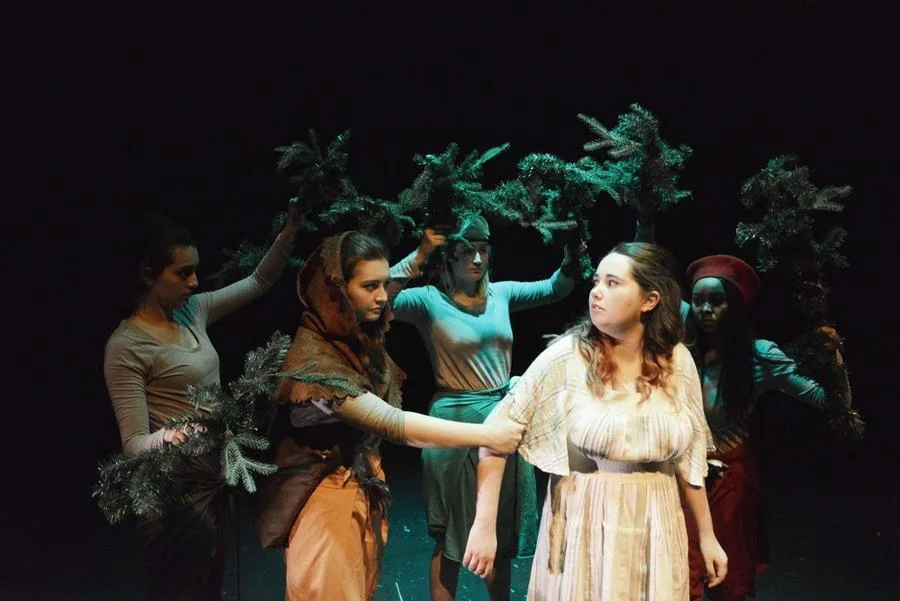
What are the arts for?
In a world increasingly focused on technology, economic outcomes and measurable results, it can be tempting to think of the arts as something optional – something we enjoy when there is time, money or space for it.
But what if the arts are not an extra?
What if creativity, imagination, reading, making and engaging with culture are fundamental to how we understand ourselves, our communities and the world around us?
That is the question explored in the first episode of Affairs of the Arts, a new podcast from the at St Mary’s University, London. In the episode, hosts and are joined by Tim Corum, Head of Arts for Richmond, to ask a deceptively simple question: do the arts still matter?
The conversation quickly reveals that the answer is more complicated than simply saying yes.
The arts are more than entertainment
For Tim Corum, the importance of the arts lies partly in what happens when people make things together.
Working across , Tim sees creativity as a way of bringing communities together and helping people imagine different possibilities for their surroundings and their futures.
Rather than thinking about the arts simply as finished products – a painting, performance, exhibition or sculpture – he focuses on arts practice: the process of collaborating, experimenting and creating.
Creativity allows people to rethink their place in the world. It can help communities reflect on who they are, imagine what they could become and develop the skills to make change happen.
This means that the value of the arts is not necessarily confined to the cultural sector. Creative approaches can influence how communities think about everything from public spaces and planning to education, wellbeing and local services.
Tim describes this as building “community through creativity”.
Can the arts change the places we live?
One of the most interesting examples discussed in the podcast comes from Tim's work in Richmond.
Arts-based projects can bring together people who would not normally be involved in conversations about planning or local services. Rather than asking communities to respond to a traditional consultation, creative activity can give people different ways of expressing what they think, want and need.
That might involve something as fundamental as play.
The podcast explores the idea that play and imagination are increasingly being squeezed out of everyday life, particularly as adults and children spend more time within highly structured environments.
For Tim, bringing play and creativity into conversations about the built environment can open up different ways of thinking about how places work.
Could a child who would never attend a planning consultation nevertheless have something valuable to contribute to a conversation about their neighbourhood?
And could creative approaches help planners, policymakers and communities imagine possibilities that a conventional consultation might miss?
This is where the arts become part of placemaking and community development – not simply something that happens in a place, but something that can help shape how people experience and understand that place.
But the arts are not automatically a force for good
The conversation also challenges the idea that the arts are inherently positive.
Tim points to the use of art and culture by authoritarian regimes as a reminder that creativity can be used for very different purposes. Art can bring people together, but it can also be used to reinforce ideology, create exclusion or manipulate collective identities.
This raises an important question: if the arts have power, who gets to decide how that power is used?
For Kim Salmons, this is particularly important because of the assumptions that often surround the arts.
There can be a perception that arts and humanities subjects are an indulgence – something primarily available to people with the time, money and privilege to pursue them.
At the same time, universities and students are increasingly encouraged to think about education in terms of employment outcomes and earning potential.
This creates a difficult question for the arts and humanities: how do we demonstrate their value in a culture that often asks what something is for in economic terms?
Who gets access to the arts?
The discussion also considers the relationship between the arts and inequality.
Although communities everywhere create art in different forms, not all forms of creativity are valued equally.
There are hierarchies within the arts themselves: some forms are recognised as prestigious or culturally valuable, while others can be overlooked.
There are also questions about who has the opportunity to participate.
If studying an arts or humanities subject is perceived as a less secure route into employment, will students from less wealthy backgrounds feel able to take that route?
And if cultural institutions primarily reflect the interests of particular groups, whose stories, ideas and experiences are being represented?
For Tim, one answer is to make arts organisations and creative practice more democratically accessible. His approach places community participation at the centre, while also recognising the expertise that professional artists can bring.
The result is not about communities simply consuming culture. It is about communities having a role in creating it.
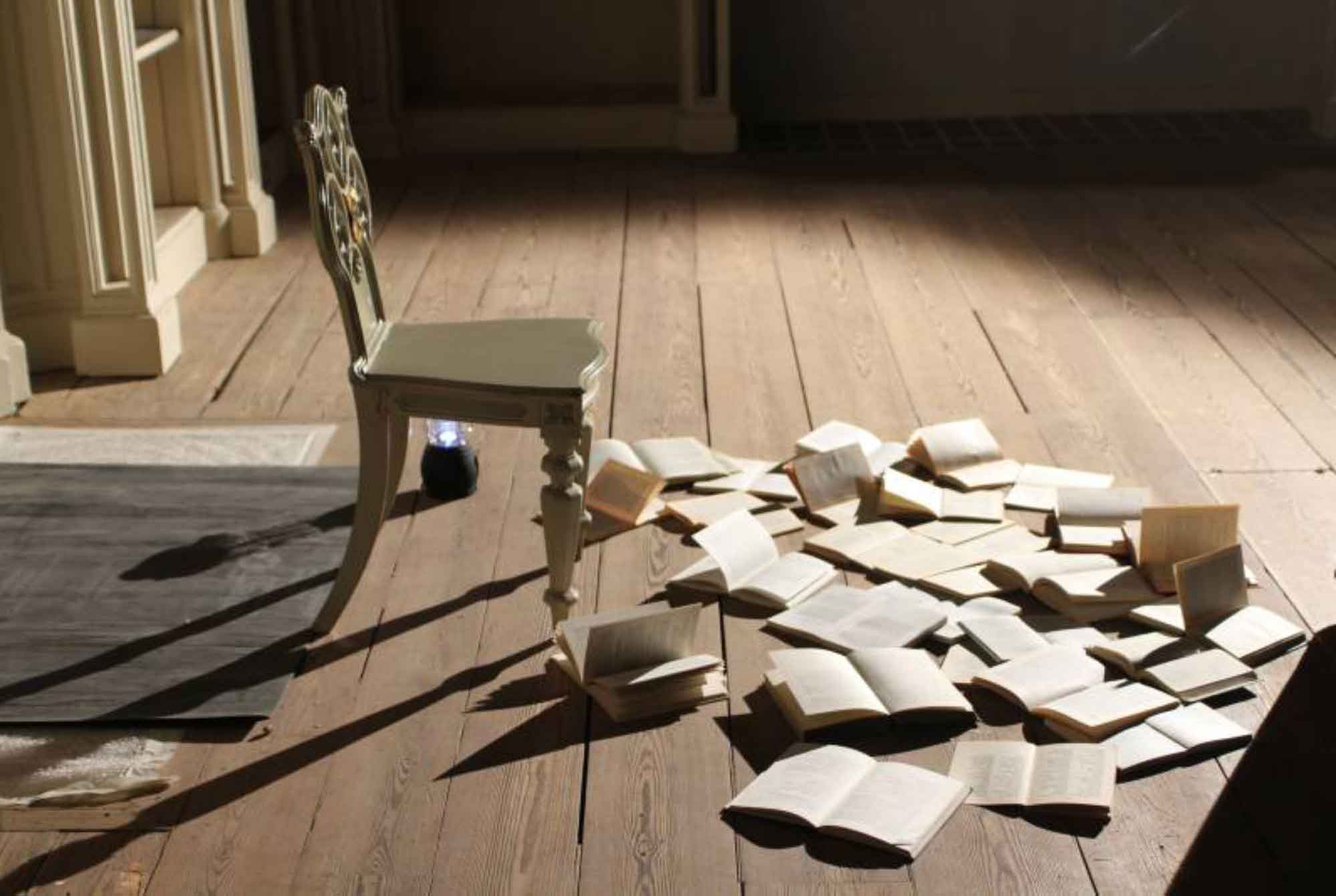
Creativity, reading and critical thinking
The conversation takes another turn when Kim connects the decline in engagement with the arts to a broader concern about reading, attention and critical thinking.
If reading, imagination and play are treated as optional extras, what happens to our ability to concentrate, reflect and question the world around us?
Kim discusses James Marriott's The New Dark Ages: The End of Reading and the Dawn of the Post-Truth Society, which considers the changing role of reading and literacy in society.
The point is not simply that people should read more books.
It is that engaging deeply with texts, ideas and creative work requires us to spend time with complexity. It asks us to interpret, question, imagine and sometimes sit with ideas that are uncomfortable or difficult.
Those are also skills that underpin critical thinking.
And critical thinking matters far beyond the arts classroom.
It matters when we encounter political arguments, evaluate information online, understand other people's perspectives or decide what we believe about the world around us.
Do the arts still matter?
By the end of the conversation, there is no neat answer to the question.
Perhaps that is precisely the point.
The value of the arts cannot be reduced to a single outcome. They can create enjoyment and beauty, but they can also challenge us. They can bring communities together, but they can also expose divisions. They can preserve culture and history, while also creating new ways of imagining the future.
They can contribute to education, wellbeing and community development, but their value does not necessarily depend on being useful in an immediately measurable way.
The challenge, then, may not be proving that the arts matter.
It may be asking what kind of society we want to create – and what role creativity, imagination, culture and critical thought should have within it.
For Tim, that means creating the conditions for a diverse cultural ecology in which artists, communities, organisations, universities and policymakers can interact.
For Kim, it means challenging the idea that the arts are simply the “icing” on society – something added once the more important things have been dealt with.
And for Mark, it raises a broader question about whether our society creates enough space for imagination, disruption and alternative ways of thinking.
Perhaps the arts matter precisely because they give us space to ask those questions.
Listen to Affairs of The Arts
In the first episode of Affairs of the Arts, Mark Griffin, Kim Salmons and Tim Corum explore the role of creativity, community, play, reading, education and culture – and ask what happens when the arts are treated as an optional extra.
Listen to the full episode of Affairs of the Arts to hear the conversation in full:
- YouTube:
- Spotify:
- Apple Podcast:
Affairs of the Arts is a podcast from the , exploring contemporary questions about culture, creativity, heritage and the role of the arts in society.