
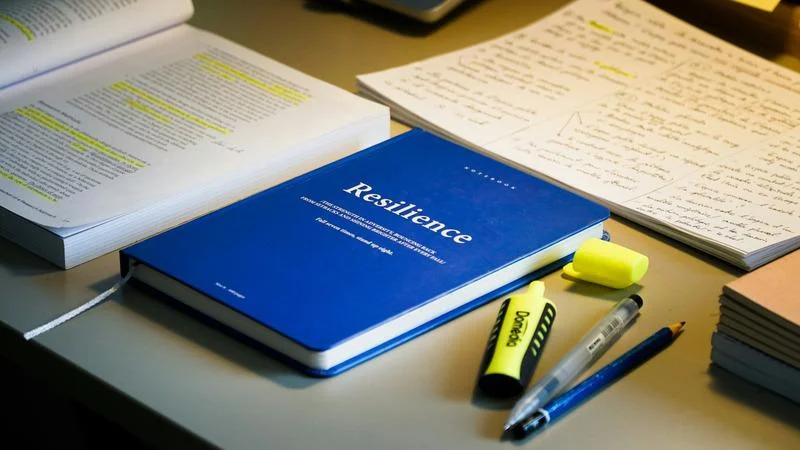
Stressed about exams? Abhishek, a Master’s student at St Mary’s, breaks down key tips to help you enter the hall as your most confident self.
Hi, I’m Abhishek Ramesh, an MA in Sports Journalism student at St Mary’s University. Being an international student, I completed my undergraduate degree in English Literature and Communication Studies and my first master’s in Society and Culture back home in India.
I’ve always been passionate about storytelling and communication skills, particularly within the sports industry. Naturally, this enabled me to pick up a few things along the way without relying on course readings. But there’s no substitute for the real test.
After nearly six years in academia, I feel I know a thing or two about preparing for exams (and a few things to avoid too!).
Here are my proven exam tips.
How to prepare for exams: Studying
When is comes to exam study tips, your journey to acing begins right at the start of the term. Every class you attend counts and is one less thing to compensate for. One way to maximise attendance is to schedule off-campus appointments and leisure activities outside class timings. This helps to recharge and stay focused while avoiding burnout.
Arriving on time is another matter altogether. Creating a solid routine around your daily commute to campus is a real lifesaver. Whatever your mode of transport, arrive well in advance. You don’t have to remain unproductive before the lecture begins, either. Use the time to work on coursework, reply to boring but important emails, grab breakfast in the ref, or simply socialise on campus.
Now that you’re in class, how can you make the most of it? By taking notes, of course! Whether you type on a laptop or scribble in a notebook, what matters is speed and ease of revision because you can’t afford to miss crucial details.
You don’t need to write down every word, as slides usually end up online anyway, so focus on catching the context: the examples, the bits a lecturer says that never make it onto a slide. Listen for verbal cues like “crucially” or “on the other hand”, since that’s usually where exam questions come from.
And don’t let notes pile up. I try to go over what I’ve written within a day of the lecture, just ten minutes to tidy it up while it’s fresh in my mind. You can even use modern AI tools here as a digital assistant to format messy bullet points or fix typos, saving a lot of pain later.

Revision tips: studying alone vs. in groups
Revising alone is where the heavy lifting happens. Active recall techniques like flashcards and timed practice beat re-reading any day. Spacing revision out over several days rather than cramming it into one sitting also makes retention much easier. Past papers are your best resource here. Answer them under timed conditions, so you start noticing the patterns that examiners do as well.
Group sessions are best used as a testing ground for what you already know, not to learn new material. Try explaining a concept to a classmate. If they follow your breakdown without you having to repeat, chances are you’ve actually learned it.
Tips for better focus
A couple of disciplined habits get me through long revision stretches. The Pomodoro method, 25 minutes on and five away from your screen, keeps away mental fatigue. Try switching study environments between home, a coffee shop, and . This prevents a monotonous feeling. Most importantly, get rid of digital distractions before you start. Keep your phone in another room or use web blockers to remove temptation.
What to do the day before an exam
The day before is for logistics. Know your exam room, check your travel plans, and pack your bag: student ID, calculator, spare pens, and a clear water bottle with the label off, since the invigilators could be strict about that. Stop revising by early evening. Overloading tasks into the night can impact your sleep without adding anything to what you know.
In the morning, gather your nerves. Eat something that keeps you full and energised. Cereal, eggs and toast work well for me.
And I also stay away from the anxious crowd outside the hall, swapping last-minute answers. That kind of needless panic spreads fast. Walk in, keep some distance from the noise, put on a familiar playlist, and go in calm rather than flustered.
How to go through an exam
Once you have the questions in front of you, read through them calmly and carefully before writing. Start with the ones you’re most confident about. The early marks settle your nerves and build momentum for the harder ones.
Stick to your allotted time. If a section’s worth 20 per cent of the marks, it shouldn’t eat up half your time, so keep an eye on the clock. If you hit a wall on a question, don’t sit there all tensed up. Leave space, move on, and come back to it after you’ve had time to collect your thoughts.
Remember to illustrate your point. Diagrams, clear structure and the odd bullet point make your answer easier to mark and your argument easier to follow.
The post-exam rule
The moment you step out of the exam room, that paper is history. Let go of the urge to participate in the immediate post-mortem with classmates, debating what you wrote for specific questions. It is a trap that yields nothing but regret and anxiety. If you have more exams ahead, protect your mental energy, forget that exam, and shift your focus entirely to the next one on schedule.
Takeaway conclusions
Exams test your preparation and composure as much as your knowledge. Build the habit of attending classes, note-taking and structured revision early. Protect your headspace in the final days and stick to a clear plan once you’re in the hall. Do that, and there’s no reason to be afraid. You’ve got this.
Support to help you succeed
You don't have to tackle exams alone. If you'd like help with revision techniques, academic writing or managing your workload, the offers one-to-one appointments, workshops and online resources to help you study more effectively.
And when it's time to knuckle down, the is the perfect place to revise, with quiet study spaces, group rooms and access to all the resources you'll need for exam season.