

In this post, Student Ambassador Millie shares her top tips on how to study effectively at university.
Alongside my History degree, I balance a range of extracurricular activities, including netball, a part-time job as a Student Ambassador, and multiple internships. Juggling all of these commitments means good is a must, and I've had to learn how to study effectively to make the most of the hours I have.
I've always been someone who enjoys studying, though I'll admit that may be slightly romanticised by my long-standing obsession with Gilmore Girls. There's just something appealing about the image of spending hours buried in books with a coffee in hand.
I'm a pro when it comes to colour-coded notes and detailed plans, and my time at St Mary's has helped me become even more organised. Hopefully, I've picked up some useful tips on how to study successfully that I can pass on.
Types of study session as a university student
Solo study
A solo study session is dedicated time spent studying independently, without the distractions of a group or classroom setting. It allows you to focus on your own goals, work at your own pace, and use the study methods that suit you best.
I like to use this time to get started on my pre-lecture reading. I usually find that 30 minutes of focused reading, followed by a 5-minute break, works best to make sure I don't overload my brain with information.
As most of our reading is online, I copy key quotes into a separate document and analyse them so I can use them in seminar discussions. During first year, lecturers often provide questions to help students focus their reading, which I found really useful.
Always remember to make a note of page numbers so you can easily refer back to them when writing assignments.
Revision sessions – how to study for exams
If your , revision sessions are the perfect opportunity to consolidate key information and identify any gaps in your knowledge.
I'm a big fan of revision cards and usually make them at least four weeks before an exam so I have plenty of time to test myself. This can be as simple as reviewing them on public transport or asking a friend to quiz you.
I also like to create my own revision podcasts. For example, I might record myself talking through key concepts and listen back while I'm out for a walk.
Another technique I find helpful is using acronyms or rhymes to remember more challenging information, such as historical dates and names. For example, many History students use the rhyme 'Aragon, Boleyn, Seymour, Cleves, Howard, Parr' to remember the names of King Henry VIII's six wives.
Even if your degree doesn't include exams, revision sessions can still be valuable for preparing for presentations and assessments. You could use this time to review note cards, practise what you're going to say for each slide, or rehearse your presentation aloud to build confidence.
Group study
As someone who thrives on collaboration, group study sessions have always been a favourite of mine. These are planned sessions where two or more students study together.
I find these sessions really useful and often meet weekly with a group of five other History students, especially during busy assessment periods. Although we usually work on our own tasks, I find it motivating to be surrounded by others who are equally focused. It also gives us the opportunity to share ideas and ask questions, like if I'm struggling to find a reference.
With us all being on the same course, we sometimes make use of the amazing spaces in London. For example, a few of us did a study session at the National Archives in Kew, where we accessed primary sources related to our dissertations for free. Studying isn't always sat at a desk!
Many courses also include group projects as part of their assessments. For example, a friend and I recently worked on a presentation for a Political Communication module. We scheduled bi-weekly sessions to plan, practise our presentation, and attend one-to-one meetings with our lecturer.
Working collaboratively helped us develop the project more effectively and made the process far more enjoyable than simply creating our slides separately and combining them at the end. This approach helped us achieve a first-class mark, and we were genuinely proud of the final result – it felt like we had created something we could present at a conference.
Working on an assignment
When it comes to assignments, I always have the same piece of advice: plan first!
Starting a long essay can feel difficult and daunting, but having a clear plan gives you a sense of direction and helps you build a stronger argument. The essays that achieve first-class marks are often those where the argument develops consistently throughout, and that is much harder to achieve without planning.
When creating a plan, I always recommend doing the reading first and using it to shape your ideas, rather than planning before you have engaged with the material. It is also important to keep track of your references as you go. Stopping halfway through a great paragraph to search for a page number can quickly interrupt your writing flow.
For assignments you feel less confident about, consider booking a one-to-one meeting with your lecturer. Taking a plan to these meetings is a great way to receive constructive feedback and ensure you are heading in the right direction. It can be difficult for lecturers to offer specific guidance if you are unsure of your own approach.
When it comes to the writing itself, I like to set clear targets for each study session. This is usually a word count goal or an aim to complete a particular section. For example, I might aim to draft 600 words in the morning and edit them in the afternoon, or focus on writing the introduction and first section.
Drafting is an essential part of the writing process. Small mistakes can affect the clarity of your argument, and taking the time to review and refine your work can make a real difference to your final grade.
What you need for a study session
Everyone focuses differently. While some people prefer background noise, others need a quiet space to concentrate.
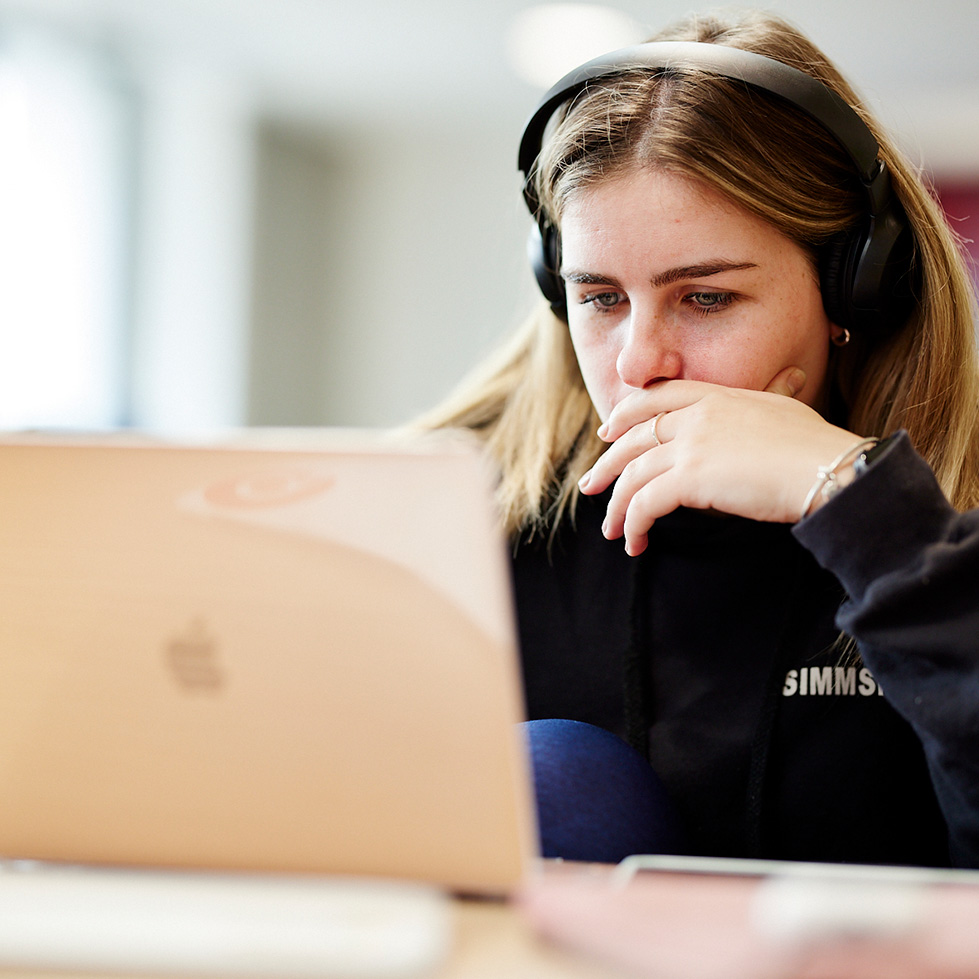
I like to listen to music while I study, so headphones are an essential part of my study setup, especially because mine are noise-cancelling. If I'm struggling to organise my thoughts, I always reach for a notebook first. Research suggests that handwriting encourages deeper learning and can improve memory and recall.
Make sure you have access to a computer as well as any books, articles, or resources you need before you start. With so many texts now available as e-books, a reliable internet connection is often essential.
Finally, don't forget the basics: keep a bottle of water nearby and have a snack on hand to help you stay focused and energised throughout your study session.
My favourite study spots
Upstairs at the campus Library, my favourite spot
Pros: is perfect to spend a couple of hours in after lectures, ideally located on campus. It's nice and quiet and there's lots of natural light.
Cons: Sometimes, your brain needs a change of scenery, and a walk to somewhere off campus is very much needed.
The British Library near King's Cross
Pros: There are so many books here – it holds nearly 14 million! There are designated reading rooms, which are quiet spaces, and being surrounded by students, researchers, and academics can be really motivating.
Cons: It can get really busy during exam periods, and travel costs and time to get there have to be considered.
My friend's desk in her student flat, which I use as my personal Pinterest board
Pros: This saves both time and money, and everything you need is close by. That means no carrying 10 heavy books to the library.
Cons: I always find studying at home comes with more distractions, whether that's flatmates stopping by for a chat or my attention drifting from the task at hand to the never-ending pile of laundry.
A local café in Twickenham, Teddington, or Richmond
Pros: This can be the perfect change of scenery and a great option for a group study session over a good coffee. My go-to order is a classic latte and a slice of carrot cake.
Cons: Buying drinks or food regularly can become expensive, cafés can often be noisy, and I find that public Wi-Fi is sometimes unreliable, meaning I can't always access the resources I need.

How to concentrate when studying: my top tips
- Set yourself a clear goal for each session. Whether it's reaching a word count target or completing a chapter of reading, having a clear priority will help narrow your focus.
- Put your phone on Do Not Disturb. Notifications and social media can quickly take you off task, so reducing distractions will help you stay focused.
- Take regular breaks. Without breaks, it's easy to feel overwhelmed and lose concentration. You'll be far more productive if you step away from your work regularly and give your brain time to recharge.
Studying at St Mary's
Learning how to study effectively takes a bit of trial and error, but once you find the sessions, spots, and routines that work for you, everything else at university becomes that much more manageable. Good luck!
Want to know more about studying at St Mary's? Take a look at life on campus.