
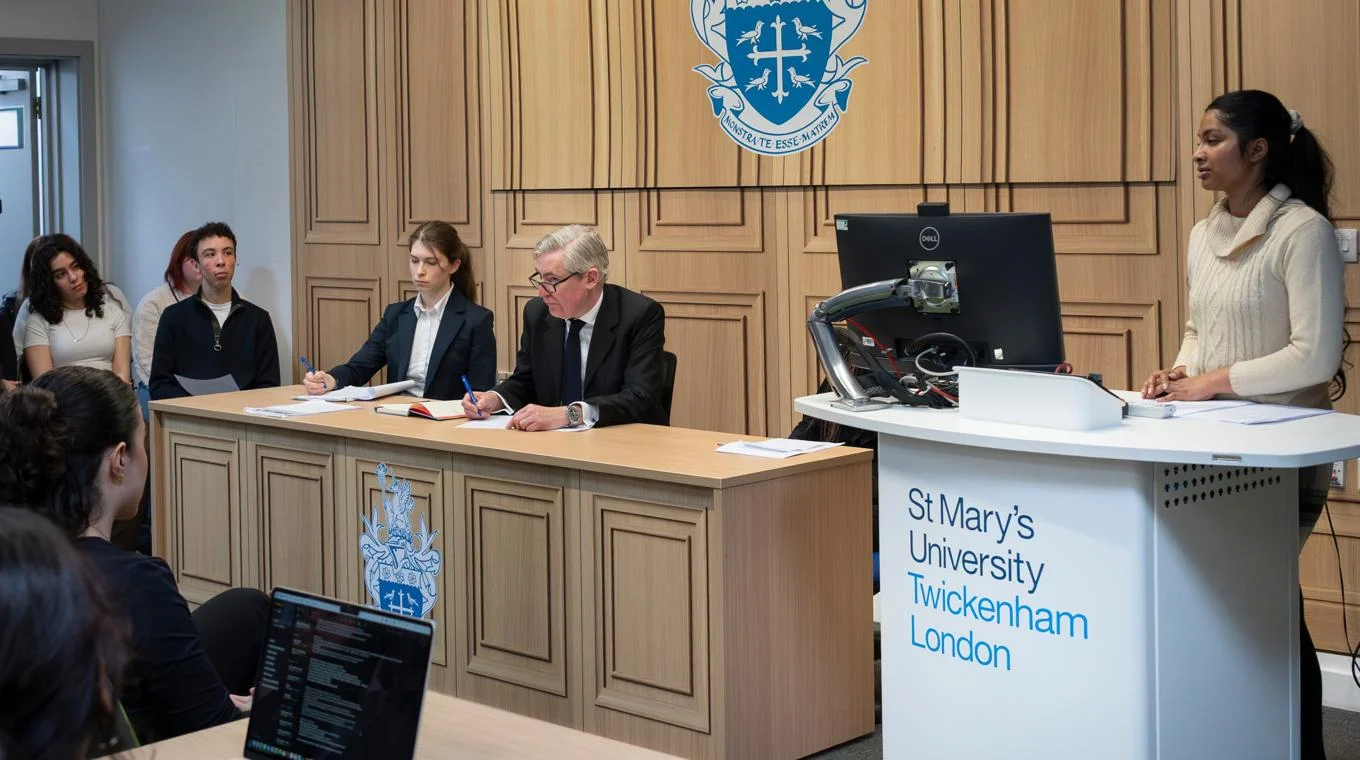
Charley Dugdale is Associate Head of Law at St Mary's University, London, and her research examines short-term prison sentences and their impact on reoffending. In this article, she reflects on the Sentencing Act 2026, outlining why moving away from short prison sentences could reduce crime, not increase it.
The introduces one of the most significant changes to sentencing policy in England and Wales in decades. At its core is a simple but controversial idea: fewer people should be sent to prison for short periods, and more should receive suspended sentences instead.
The reform is partly a response to a prison system under severe strain. Overcrowding has reached critical levels, forcing policymakers to confront difficult questions about who really needs to be behind bars. Critics have framed the move as being soft on crime. But this criticism risks missing a crucial point: short prison sentences are among the least effective ways to reduce offending.
What is a short prison sentence, and who receives one?
The Ministry of Justice defines a short-term prison sentence as one lasting up to 12 months. These sentences are typically imposed for low-level, non-violent offences, often involving individuals who are already known to the criminal justice system.
At any given time, around 6,000 people in England and Wales are serving these short sentences. While that may seem modest in the context of the overall prison population, their impact is disproportionately large, both in terms of prison capacity and reoffending rates.
Why short sentences don’t work
The evidence here is not new. The Ministry of Justice data has consistently shown that people released from short prison sentences have the highest rates of reoffending of any group.
This is not simply a failure of individuals – it's a failure of the system. Those who receive short custodial sentences are often among the most vulnerable in society. Many struggle with addiction, unstable housing, or untreated mental health conditions. These are complex, long-term issues that cannot be addressed in a matter of weeks.
In fact, short spells in prison can make things worse. A brief period of custody can disrupt housing arrangements, sever access to support services, and damage fragile employment prospects. When individuals are released, they often return to the community in a more unstable position than when they entered.
There's also a deeper contradiction. For some, prison provides a temporary sense of order, regular meals, a place to sleep, a structured routine. But this stability is short-lived. Once released, individuals face the same underlying challenges, often with fewer resources than before.
What the Sentencing Act 2026 aims to do
The Sentencing Act 2026 attempts to break this cycle by shifting the emphasis away from short-term custody. Instead, courts are encouraged to make greater use of suspended sentences and community-based alternatives.
These sentences are not a “free pass”. They come with strict conditions, such as rehabilitation programmes, curfews, or unpaid work, and the threat of imprisonment if those conditions are breached. The difference is that they allow individuals to remain in the community, where meaningful support and supervision can take place.
This reflects a broader shift in thinking: that reducing reoffending, and therefore protecting the public, is better achieved through targeted intervention than short bursts of imprisonment.
A smarter approach to justice?
The debate around these reforms is likely to continue, particularly in a political climate where toughness on crime remains a powerful narrative. But the question policymakers must confront is not simply whether punishment feels sufficient, but whether it works.
On that measure, short-term imprisonment has long fallen short. Moving away from it is not about being lenient, it is about being effective.
If the aim is to reduce crime rather than simply respond to it, the Sentencing Act 2026 may represent a necessary, if uncomfortable, step in the right direction.
Law at St Mary's University
As Associate Head of Law at St Mary's University, London, Charley provides strategic leadership across our law provision, including curriculum design and external partnerships. We offer a range of law courses at undergraduate and postgraduate level, from Law to Criminology and International Business Law.