Associate Professor Christine Robinson is the course coordinator of the Graduate Diploma in Early Childhood Teaching at Edith Cowan University in Perth, Western Australia. Christine is an established HE leader, working previously as an Associate Dean Research, Early Childhood Program Coordinator and Assistant Principal in a Catholic school. Christine researches and teaches in spirituality, play-based and relational pedagogies, literacy and religious education. Christine currently Chairs the international collaboration known as the Global Researchers Advancing Catholic Education (G.R.A.C.E).
What is spirituality and how is it connected to wellbeing?
Spirituality has often been misunderstood as being the same as religion, but we now understand spirituality as part of being human, whether someone is religious or not. The spiritual capacity resides within every person, and when we talk about child development, we name the spiritual capacity alongside the other developmental domains (cognitive-linguistic, person, social, emotional, creative, physical). Despite the spiritual capacity being recognised in the UN Convention on the Rights of the Child and other nationally-based documents such as the (Ministry of Education New Zealand, 2025) and the Early Years Learning Framework (Australian Government Department for Education, 2022), the importance of nurturing young children’s spirituality, and its connection to wellbeing, has been neglected.
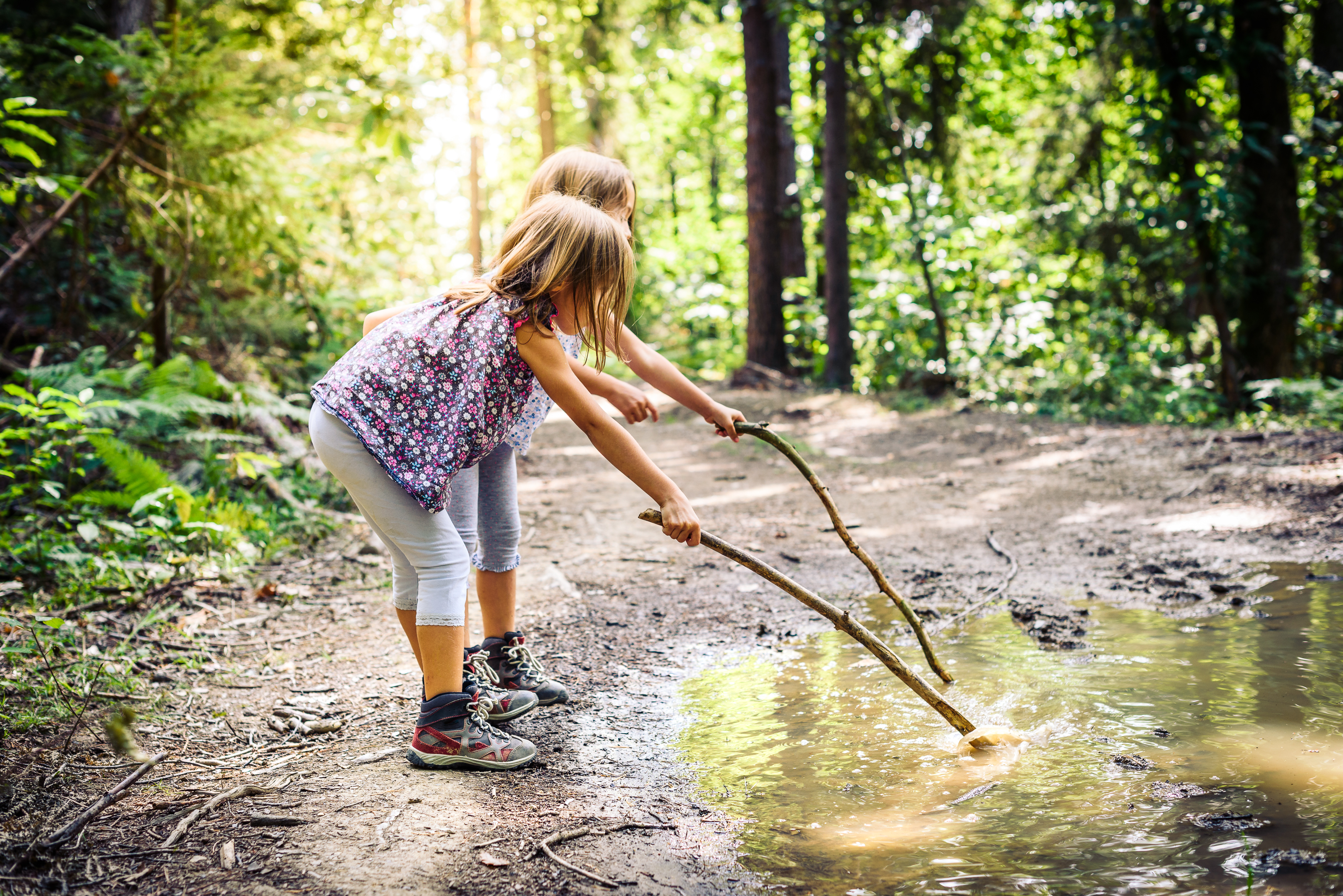
Spirituality is most commonly understood as a sense of connection. This connection is experienced and expressed in a variety of ways () – a connection to self, to others, to the world and then for some, to a sense of something greater (a ‘God’). From an early years perspective, spirituality is closely tied to the construct of identity, meaning and purpose in life (connection to self), feeling a sense of belonging and compassion (connection to others), appreciating and caring for the natural world and experiencing wonder and awe (connection to the world) and then, for some, the development of faith through connection to a Transcendent (‘God’).
It is widely recognised that the early years are critical for laying the foundations for thriving into adulthood ( and that in order for this to occur, children need their development nurtured in an integrated and interconnected way. A focus on spirituality supports positive wellbeing as children learn ways to connect and strategies for overcoming the shadow of spirituality (anxiety, disconnectedness, worry, depression). Supporting spiritual wellbeing as a pedagogical practice can set children up for success.
Why focus on spiritual capabilities?
The researchers sought to present the image of the child as capable – the child as a co-constructer of knowledge who possesses agency and voice. From this perspective, it was a natural fit to include capability statements within the Framework to articulate the way spirituality could be nurtured. Nine capabilities are presented in the document as ways that spirituality can be nurtured, such as ‘I can imagine and be creative’ and ‘I can connect with the world’. Each capability contains a research-informed, educator friendly explanation of how spirituality could be intentionally nurtured across the age group of birth to 8 years. The role of the educator is also explicitly addressed as research shows that, often, spiritual moments are child-initiated and the role of the educator becomes one of listener and facilitator rather than director.
Laying the foundation for thriving
When children have developed their spiritual capacity, they are better able to manage and possibly overcome feelings that they experience through adversity or trauma (). Spirituality is referred to as a protective factor in that it can lay the foundation for future need. In the early years, if children have the opportunity to experience connection, grow their resilience and learn strategies to overcome adversity then these work to protect the child as they move into adulthood. In this way, early investment in spirituality is tied to well-being, which is essential to thrive. The thriving child is one who feels safe, secure and connected.
A call to action
In a world where disconnection is a reality for many, the time for a focus on the spiritual couldn’t be more urgent. In better understanding spirituality, there is a role we can play as educators to embed spiritual capabilities as a pedagogy – a way of leading learning.
How could you draw on children’s spirituality to nurture their sense of connection to self, others, the world or God?
What opportunities could you afford children to wonder, to create and imagine, to grow their sense of meaning and purpose?
- Australian Government (2024). Early Years Strategy 2024-2034.
- Australian Government Department of Education [AGDE], 2022. The Australian Early Years Learning Framework. AGDE.
- Ministry of Education New Zealand, (accessed 2025). . .
- Prior, M.K. & Petra, M. (2019). Assessing the effects of childhood multi-type maltreatment on adult spirituality. Journal of Child and Adolescent Trauma 13, 469-480.
- Robinson, C., Hyde, B., Forlin, C., & Best, M. (2025). The experience and expression of spirituality in childhood: A systematic review and qualitative synthesis of the literature. Journal for the Study of Spirituality, 1–16.
- Robinson, C., Hyde, B. & Best, M. (2024). A Framework for Young Children’s Spiritual Capabilities Foster Resilience and Wellbeing with this research-based guide for 0-8 year olds. Turtle Publishing.