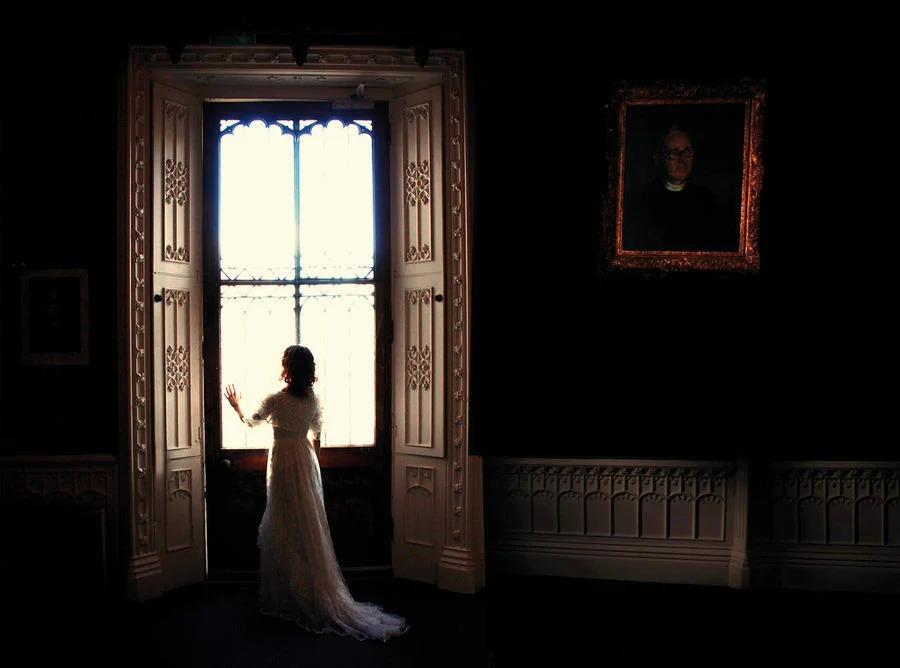
From Dracula and Frankenstein to haunted houses and Halloween celebrations, the Gothic has become an enduring part of our cultural imagination. But why are we so drawn to darkness, mystery and the supernatural? And how did a remarkable house in Twickenham help shape the Gothic stories and experiences we recognise today?
In the third episode of Affairs of the Arts, a podcast from the at St Mary’s University, London, host and are joined by David Gaimster, Chief Executive Officer of , to explore the origins of the Gothic imagination, the appeal of horror and the history behind Halloween.
How did the Gothic imagination begin?
The story of the Gothic imagination begins in 18th-century Twickenham, with Horace Walpole and his extraordinary home, Strawberry Hill House.
The son of Britain's first prime minister, Robert Walpole, Horace was a writer, historian, designer and artist. At a time when wealthy households favoured restrained classical architecture, he created something entirely different: a Gothic castle designed to evoke the mystery and atmosphere of an ancient ancestral home.
With its dark interiors, elaborate decoration and labyrinthine spaces, Strawberry Hill House offered an experience unlike anything else in the architectural landscape of the time.
The house also inspired Walpole's The Castle of Otranto, published in 1764 and widely regarded as the first Gothic novel. Its supernatural happenings, ghostly apparitions and haunted-castle setting established themes that would become familiar features of Gothic literature, influencing generations of writers, from the Brontë sisters to the authors of Dracula and Frankenstein.
As David explains, Walpole's creation was more than a conventional stately home. It was an immersive, theatrical experience, drawing on real historical architecture and reimagining it to create a world of suspense, romance and mystery.
Why are we fascinated by darkness and fear?
One of the central questions explored in the episode is why people are so fascinated by the mysterious, the frightening and the unknown.
For David, the Gothic imagination was partly a reaction against the Enlightenment and its emphasis on reason, alongside the industrialisation and commercialisation of British society. Where the world around Walpole increasingly emphasised rationality and order, the Gothic offered an opportunity to explore emotion, imagination and the uncanny.
At Strawberry Hill House, this was achieved through carefully designed spaces that encouraged visitors to experience a particular atmosphere. Moving from the brightness of the gardens into the darker, more enclosed interiors created a sense of anticipation and unease.
Walpole even invented the word gloomth to describe the atmosphere created by these mysterious, shadowy environments.
For Dr Kim Salmons, our attraction to darkness may also reflect a desire to explore the more unsettling parts of our own psychology. Gothic stories allow us to encounter fear, suspicion and the supernatural through fiction, offering a way to explore difficult emotions in a controlled setting.
The arts do not always need to offer reassurance or straightforward happiness. Sometimes, their value lies in giving us space to explore uncertainty, darkness and the more complicated aspects of being human.
How did the Gothic shape Halloween?
Halloween is now associated with pumpkins, costumes, ghost stories and supernatural entertainment. Yet its history is closely connected with older traditions of death, remembrance and the changing seasons.
The name Halloween refers to the eve of All Hallows' Day, and the festival has connections with Christian observances surrounding the dead, including All Saints' Day and All Souls' Day.
As David explains, these traditions offered opportunities to remember those who had died and reconnect with ancestors as autumn gave way to winter. In this sense, Halloween was not simply about fear, but also about celebrating and remembering those who had passed away.
The Gothic imagination has helped shape how these traditions are represented and experienced today, bringing together images of ghosts, haunted castles, graveyards, decay and the supernatural.
David also highlights just how prominent Halloween has become within the cultural heritage sector, describing it as one of the biggest retail seasons for heritage attractions such as Strawberry Hill House.
Where did trick-or-treating come from?
The episode also explores the origins of trick-or-treating and how Halloween traditions have evolved across Britain and beyond.
Dr Kim Salmons discusses souling, a historical custom in which people visited households and received food in exchange for prayers for deceased relatives. These practices were connected with pre-Reformation Christian beliefs surrounding the dead and help explain some of the traditions associated with modern trick-or-treating.
Halloween also developed differently across Britain. While traditions continued in parts of Wales, northern England and Northern Ireland, the celebration became less prominent in London, where the anniversary of the Gunpowder Plot on 5 November took an important place in the calendar.
Some Halloween customs were carried to the United States through emigration, where they evolved before returning to Britain in new forms.
As David observes, there is an interesting cultural cycle at play: traditions that might appear to be modern American imports can have much older European roots. In some ways, we have come full circle.
Listen to Affairs of the Arts
Listen to the full episode to discover how Horace Walpole and Strawberry Hill House helped shape a cultural tradition that continues to influence our stories, celebrations and imaginations.
- YouTube:
- Spotify -
- Apple Podcast -
Affairs of the Arts is a podcast from the School of the Arts at St Mary's University, London, exploring culture, heritage and ideas, and the role of the arts in contemporary life.