
For many students, choosing a university degree is one of the most important decisions they’ll ever make. It’s not simply a question of what they want to study – it’s also a question of who they want to become. For those who are passionate about science, fascinated by people, and motivated by the opportunity to make a genuine difference, a Bachelor’s degree in Medicine and Surgery, more commonly known as an MBBS, offers a distinctive route into a profession built on knowledge, service, and public trust.
Medicine is more than a subject, job, or career. It’s about joining a profession and becoming part of something bigger than yourself. It combines scientific knowledge with compassion, critical thinking with communication, and technical expertise with service to others. At its heart, medicine is about helping people through some of the most challenging moments of their lives.
What is an MBBS degree?
Defining the MBBS degree
MBBS stands for Bachelor of Medicine, Bachelor of Surgery. Despite the name, it isn't two qualifications – it's a single undergraduate degree covering both medicine and surgery, and it's what students need to practise as a doctor in the UK.
Universities use different abbreviations for the same award: MBBS, MBChB, BMBS and BM BCh all describe a primary medical degree of equivalent standing. On successful completion of this medical programme and passing the Medical Licensing Assessment (MLA), graduates can then apply for provisional GMC (General Medical Council) registration and begin working through the National Health Services (NHS) Foundation Programme.
How many years is a Bachelor of Medicine and Surgery?
Most MBBS degrees in the UK take five years, including the MBBS at St Mary's.
Training continues after graduation with the two-year NHS Foundation Programme, followed by speciality training of a further three to eight years. Medicine is a long-term commitment – but from graduation onwards, that training is paid.
How is the course structured?
At St Mary’s University, our five-year MBBS is organised into two phases:
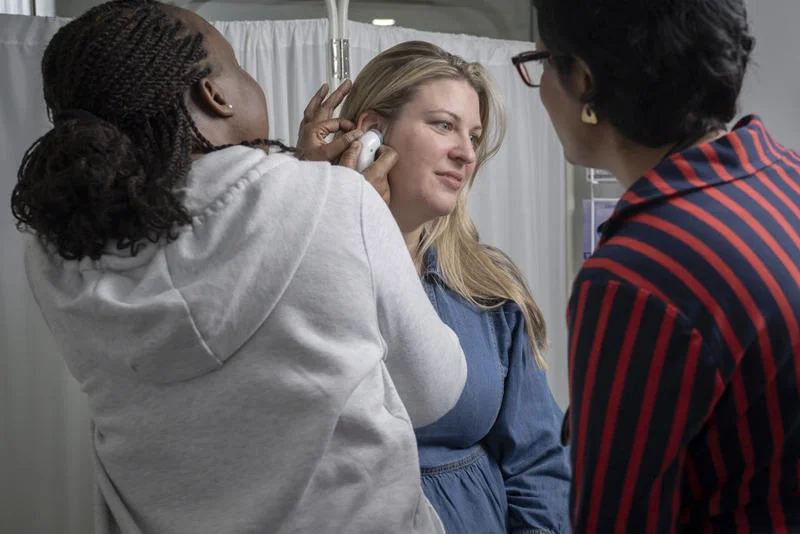
Years 1 and 2 cover integrated science and clinical medicine – anatomy, physiology, biochemistry, pharmacology and immunology – studied in the context of real patient conditions. It also covers the psychology and sociology of health, medical law and ethics, and clinical and communication skills developed through simulation and small-group case discussion. Placements in general practice and community settings begin in the first year.
Years 3 to 5 are increasingly workplace-based. Students rotate through general medicine, surgery, urgent care and general practice, then specialties such as mental health, child health, women's health, and cancer and end-of-life care. The final year focuses on the transition to practice, with assistantships that mirror the working role of a newly qualified doctor.
Assessment runs across written examinations, practical clinical examinations (OSCEs), workplace-based assessments and portfolio work, alongside the national MLA.
What are typical entry requirements?
Requirements vary between medical schools, but most UK applicants will need strong science grades, an admissions test and a successful interview. At St Mary's, entry requirements are:
- A levels – AAA, including chemistry or biology at grade A and a second science (biology, chemistry, physics or maths) at grade A. The third A level can be any subject; applicants from non-science disciplines are actively welcomed.
- GCSEs – grade 6 or above in maths, English language, biology and chemistry (or dual science).
- International Baccalaureate – 36 points, with grade 6 in three Higher Level subjects, including chemistry or biology and a second science.
- Graduate applicants – a 2:1 honours degree in a biosciences-related subject, awarded within the last three years.
- UCAT – all applicants must sit the University Clinical Aptitude Test.
- Interview – online Multiple Mini Interviews (MMIs), assessing communication, ethical reasoning and motivation for medicine.
- English language – IELTS 7.0 overall and in each component, or equivalent.
Applicants also need an enhanced DBS check and satisfactory occupational health clearance before starting clinical placements. Meeting the minimum requirements does not guarantee an interview invitation – medicine is competitive, and offers depend on interview performance.
Why choose a Bachelor's degree in Medicine and Surgery?
Medicine is about more than disease
The purpose of medicine now extends well beyond the diagnosis and treatment of illness. While both remain central to the role of the doctor, modern healthcare increasingly recognises the importance of prevention, wellbeing, and addressing health inequalities.
Doctors today must understand why some individuals and communities experience poorer health outcomes than others. They need to recognise how education, housing, employment, social isolation, and access to healthcare influence health, and how compassionate clinical practice can help respond to these wider realities.
Medicine is one of the most rewarding careers in the world
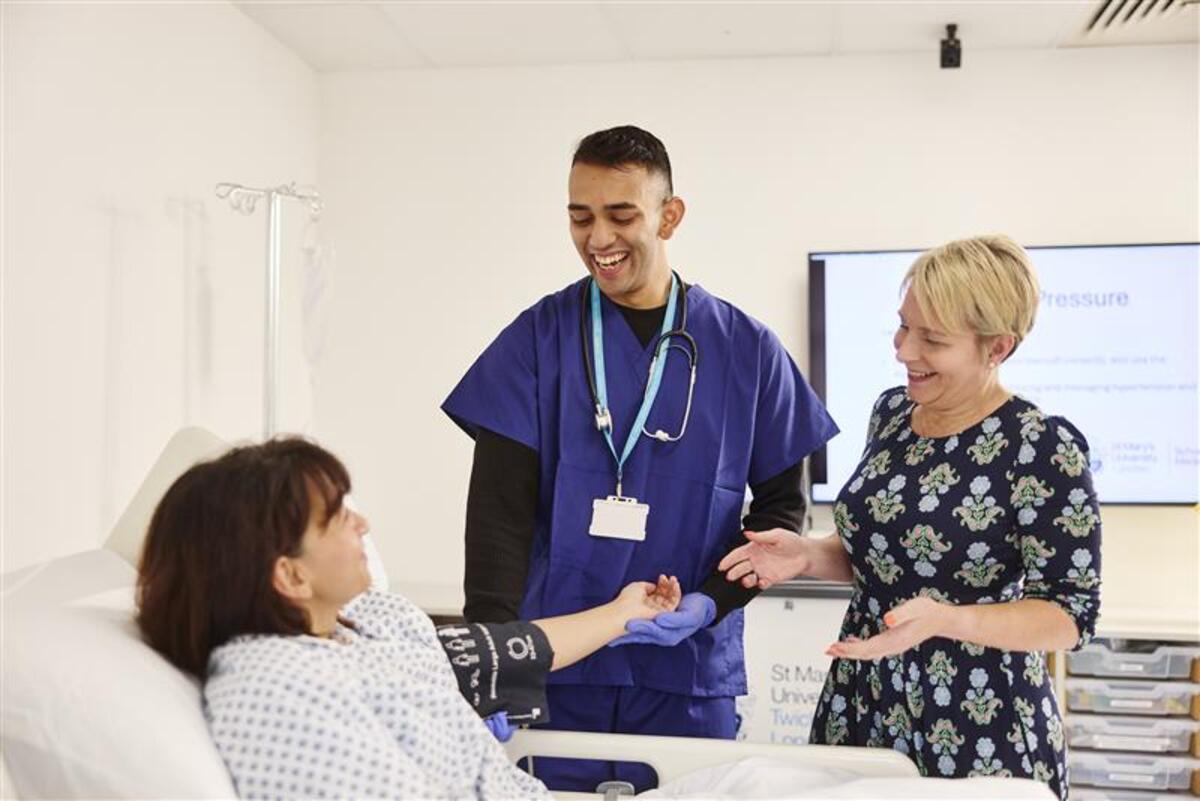
This wider purpose is one reason medicine remains one of the most rewarding careers in the world. Few professions offer the privilege of helping people when they are at their most vulnerable, supporting them through illness, uncertainty, recovery, and change. No two patients are identical, and no two days are ever the same. Doctors continually learn, solve problems, meet people from many different backgrounds, and work in teams across a wide range of healthcare and professional settings.
The rewards are varied and profound: helping a person recover from a life-changing diagnosis, supporting a family through tragedy, contributing to new knowledge, or leading improvements that benefit patients and communities. Few careers offer this combination of purpose, responsibility, meaning, and lifelong opportunity for growth.
Diverse career opportunities in medicine
The same breadth is reflected in the careers that follow. Many students begin medical school believing that doctors follow only a small number of familiar pathways. In reality, medicine offers one of the broadest and most flexible professional futures available.
Following graduation, doctors can pursue careers in:
- General practice
- Hospital medicine
- Surgery
- Paediatrics
- Psychiatry
- Emergency medicine
- Public health
- Medical education
- Academic research
- Health leadership and management
- Global health
- Digital health and artificial intelligence
The doctors of the future will also work in areas that barely existed a decade ago. Advances in genomics, data science, artificial intelligence, digital health technologies, and personalised medicine are transforming healthcare worldwide. Tomorrow's doctors will need to understand how these innovations can improve patient care while maintaining the human values that remain central to medicine.
Learn through real patient care
To prepare for that future, medical education needs to connect knowledge with practice from the outset. One of the most exciting aspects of studying medicine is learning through real clinical experience. Students learn best when scientific knowledge is connected to authentic patient experience, and the strongest programmes help students see from the start how science, communication, professionalism, and compassion come together in excellent patient care.
When clinical placements begin early, students can follow patient journeys across home, community, primary care, and hospital settings in an integrated way. This helps them understand not only disease and treatment, but also the wider social, psychological, and cultural factors that influence health outcomes and the experience of people accessing care.
As the course progresses, students spend increasing amounts of time in workplace settings. By the later stages of training, much of their learning takes place in clinical environments, where they develop the knowledge, skills, and professional behaviours needed to enter the NHS after graduation.
Studying Medicine in the UK
The United Kingdom's NHS is internationally recognised as one of the world's largest and most influential healthcare systems.
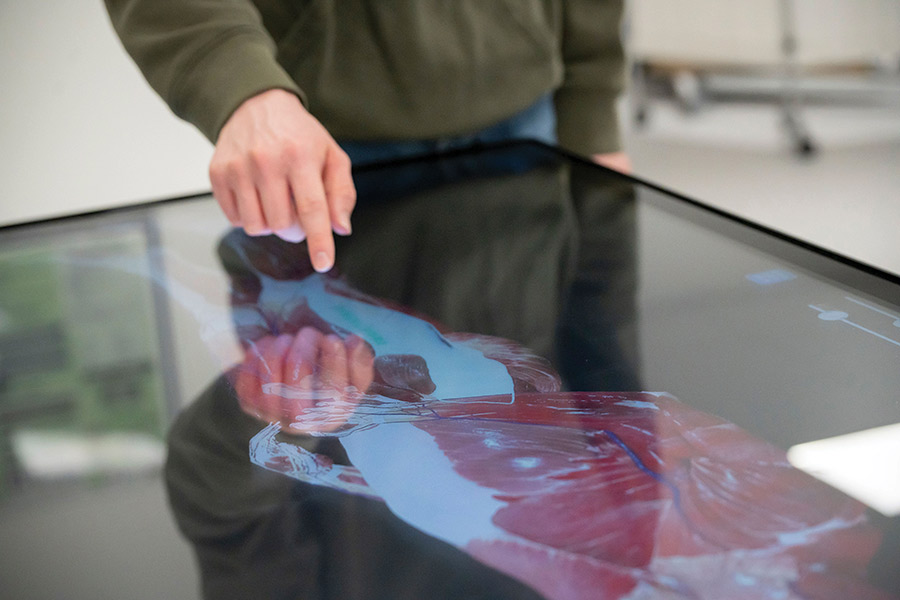
Studying medicine within NHS settings exposes students to a remarkable diversity of patients, conditions, cultures, and healthcare challenges. Students learn how healthcare is provided at scale while experiencing the benefits and complexities of an integrated healthcare system.
London provides particularly rich learning opportunities. As one of the world's most diverse cities, it offers exposure to patients from a wide range of cultural, ethnic, and socioeconomic backgrounds. Students develop the cultural awareness and communication skills necessary for modern clinical practice while learning how wider factors influence health and wellbeing.
These experiences help create doctors who understand patients first as people, rather than as collections of symptoms or conditions that define their identity.
A supportive community matters
Alongside clinical opportunity, the learning environment matters. Medical school is challenging because doctors need resilience, perseverance, and the ability to work with complexity and uncertainty. Students must develop a deep understanding of scientific concepts, acquire clinical skills, and balance academic and professional responsibilities with self-care and personal wellbeing. The right support network is therefore not an optional extra; it's central to helping students become capable, confident, and compassionate doctors.
How to choose a medical school
When choosing a , applicants should look beyond rankings and league tables. They should ask whether the school will help them grow into the kind of doctor they aspire to become, and whether its curriculum, clinical experiences, support systems, and values match the future they want to help shape.
- Will I receive excellent teaching?
- Will I gain meaningful clinical experience?
- Will I be supported academically and personally?
- Will I be prepared for the future of healthcare?
- Will I become the kind of doctor I aspire to be?
Your journey into medicine starts here
Studying medicine is undeniably demanding. It requires commitment, resilience, curiosity, and compassion. Yet for those who choose this path, it offers an extraordinary opportunity: to keep learning, to serve others, and to contribute to healthcare in ways that can change lives.
An MBBS degree is more than a qualification. It's the beginning of a professional journey built on trust, service, scientific enquiry, and lifelong learning. It asks students not only to acquire knowledge and skills, but to develop the judgement, values, and sense of responsibility needed to improve lives every day.
The future of healthcare needs doctors who can think critically, act compassionately, embrace innovation, and lead positive change. For applicants, the question is therefore not simply why study MBBS, but where they will be best supported to become the doctor they hope to be. That is where the choice of medical school matters.
Why study an MBBS at St Mary’s?
The MBBS at St Mary's University London School of Medicine is designed to develop doctors who are clinically capable, digitally confident, and committed to improving lives. From Year 1, students gain early NHS and community clinical placements, learn in state-of-the-art simulation facilities, and follow a curriculum that integrates science, clinical medicine, digital health, and professionalism, with a strong emphasis on prevention, health inequalities, and community engagement.
Just as importantly, students learn in a place where they are known and supported. Small-group teaching, personalised pastoral care, and a close-knit campus community help students build the confidence, resilience, and professional purpose that medical school demands. For those who want to study medicine with purpose – and take the first step towards becoming the kind of doctor the future of healthcare needs – St Mary's offers a distinctive place to begin.