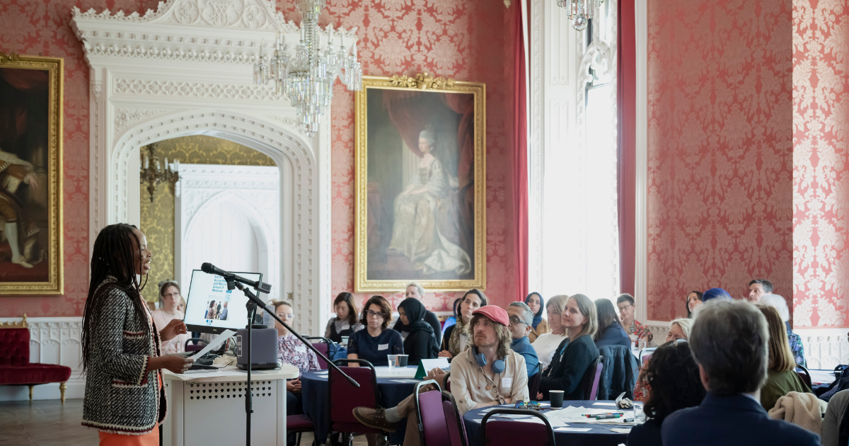
St Mary’s University has outlined plans for a community-centred approach to medical education and training, following a roundtable discussion with local people, community and health partners aimed at shaping the curriculum and placement model for its new School of Medicine.
The Twickenham-based institution launched its Social Accountability Framework on 29 April, which will guide how and where medical students are trained, with an emphasis on local health priorities and addressing health inequalities across south-west London.
The School’s first cohort will start in September 2026 and will be based at the University’s Twickenham campus. From Year 1 onwards, students will undertake placements across GP, hospital, and community settings, learning through delivering care to those most in need. The model has been designed to ensure that medical training reflects the wider societal factors that influence health outcomes, including housing, employment, biases, and access to health services.
The framework has been developed through ongoing engagement with local communities and is intended to embed co-creation into the School of Medicine’s long-term approach. Community members will continue to contribute to decisions on teaching, placement opportunities and priorities as the programme develops.
Professor Sonia Kumar, Founding Executive Dean of Medicine at St Mary’s University, said the approach is unique in the landscape of medical education in the UK.
“This is a School with the local community at the heart of its teaching. The aim is to train doctors whose education reflects the priorities of the communities they will go on to serve.”
Professor Samira Ben Omar, Professor of Inclusive Practice and Lead for Inclusion and Communities at St Mary’s, said the framework places lived experience at the centre of medical education.
“This approach brings the voices of local people and communities into curriculum development right at the start of our journey, and we are committed to ensuring they remain a critical part of the conversation as the School of Medicine grows,” she said.
The Social Accountability Framework roundtable brought together community organisations, NHS partners and people with lived experience to discuss what matters most to local populations, and how medical students should be prepared for learning in both community and clinical settings.
Community contributors at the event included Fatuma Favell‑Clarke, a Parent and Carer, Trustee of SEND Parent Carers in Wandsworth, social worker and mental health professional at The Royal Borough of Kensington and Chelsea, and Roger Smith, chair of the Hounslow Respiratory Support Group.
About St Mary’s School of Medicine
- St Mary’s School of Medicine is one of the UK’s first socially accountable Schools of Medicine, designed to place humanity at the centre of healthcare education.
- The new School of Medicine aims to train doctors who are not only scientifically and digitally proficient, but also ethically grounded and closely connected to the communities they serve.
- The MBBS Medicine programme has been developed to reflect the realities of modern healthcare, equipping graduates to work in a digitally advanced and socially complex environment, while addressing health inequalities and the needs of underserved populations.
- The founding Executive Dean Professor Sonia Kumar brings over 20 years’ experience as a GP, working in deprived communities in South London, alongside academic roles at leading UK institutions including Imperial College London, King’s College London, and University of Leeds.
- Professor Kumar’s leadership combines clinical expertise, educational innovation, and a strong commitment to addressing health inequality, with a focus on restoring compassion and humanity in medical practice.
Contact: Jess Farmery, Lexington - jessica.farmery@lexcomm.co.uk
Enquiries
For enquiries, please contact:
Press team
020 8240 8262