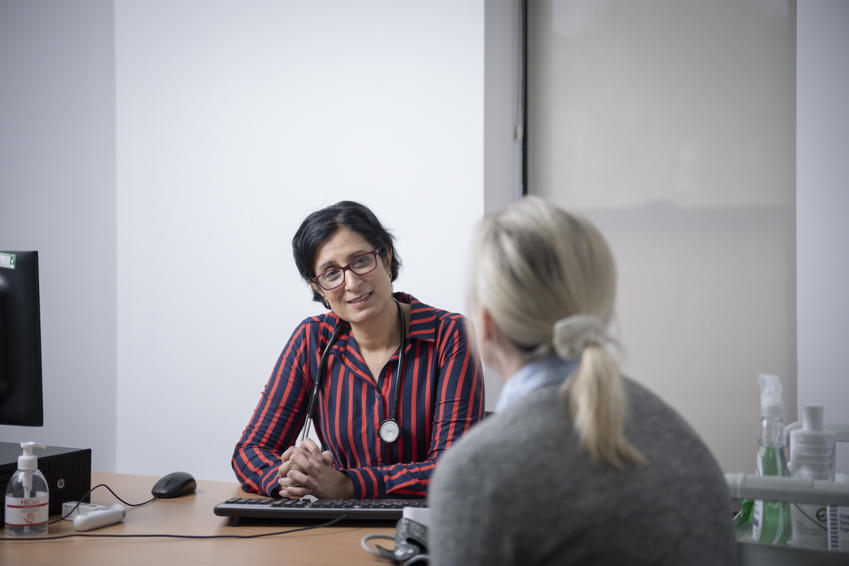
Professor Sonia Kumar, Founding Executive Dean, St Mary’s University School of Medicine
The General Medical Council’s 2026 National Training Survey offers one of the clearest annual pictures of how medical training is being experienced across the UK. More than 74,000 doctors in training and trainers contributed this year, at a time when the expectations placed on both are continuing to grow.
There are findings to welcome. Trainees continue to rate teaching and clinical supervision highly, with more than three quarters describing their teaching as good or very good. The survey also points to modest improvements in burnout risk, confidence in raising concerns and experiences of discriminatory behaviour.
Yet steady improvement is not transformation. Almost one in five doctors in training remain at high risk of burnout. Only 61% said they felt adequately prepared for their first foundation post, falling to 45% among internationally qualified doctors. Trainers continue to report pressure too, including rising burnout risk in parts of the trainer workforce.
These findings underline a broader challenge to the sector: students need knowledge and clinical skills for safe patient care, but also need highly developed professional and personal skills to navigate and thrive in complex, pressured health systems.
At St Mary’s University School of Medicine, as we prepare to welcome our first student cohort onto campus this autumn, we reflect on how this gap in training has shaped our approach from the outset. We are establishing London’s newest medical school at a time when care is increasingly delivered beyond traditional hospital settings, shaped by digital tools, community priorities and persistent health inequalities. At St Mary’s School of Medicine, our CARE principle - Compassion, Ambition, Readiness and Excellence - reflects our ambition to create a School that adequately prepares students for the health system and communities they will serve.
Our MBBS programme combines scientific excellence with early and continuous clinical exposure, community-based learning and values-led education. From year one, students will begin to understand how health and social care connect across home, community, primary care and hospital settings.
Clinical rigour must remain central, but effective preparation for practice needs students to understand both the scientific underpinning and the whole person behind clinical presentations, their housing, work, family responsibilities, discrimination, previous experiences of healthcare and barriers to access and treatment.
The preparedness finding in the survey should prompt us all to question how and where students are learning the real world professional demands of being a doctor in the 21st Century. Early opportunities for students to learn through service alongside patients, multidisciplinary teams and community groups helps students connect knowledge with application and understand how decisions are made and uncertainty is managed in busy, changing settings.
The National Training Survey shows why medical education cannot stand still: its needs to adapt, be agile, brave and progressive. High-quality teaching and supervision remain at its core, but our shared collective responsibility is to ensure our graduates feel better equipped, trainers feel supported and patients benefit from care that reflects their real lives.
New Schools of Medicine have a unique opportunity, and a responsibility, to help lead that change. As St Mary’s School of Medicine prepares to open its doors, our aim is simple: to train doctors who can address societal priorities and inequalities within a stretched healthcare system with compassion, competence and humility.
Enquiries
For enquiries, please contact:

Press team
020 8240 8262