
Explore power, conflict and the global order with our expert-led Politics and International Relations degree
Engage with the ideas, institutions and events shaping the contemporary world with our innovative BA Politics and International Relations degree. You’ll study:
- Contemporary politics, from AI and digital power to the climate crisis.
- Political ideologies and core concepts such as democracy, freedom, justice and authority.
- War, security, migration, human rights and global governance.
- Politics from the perspective of Humanities and Liberal Arts.
A politics degree for a changing world
We live in a period of rapid political, economic, and technological change. Conflict, political and economic instability, climate change, migration, disinformation, and the growth of AI are reshaping how societies are governed and how people live. Understanding these developments has become an urgent task for informed and engaged citizens.
Our Politics and International Relations degree responds to this challenge. Course units address the issues that matter today, and give you the theory, history and evidence you need to analyse them critically. You’ll explore:
- How power is held, contested and legitimated in democratic and authoritarian systems.
- How rights, borders and identities are shaped by politics.
- How war, security, global governance and digital technologies are changing the international order.
Our course content applies critical perspectives to contemporary issues that matter to you.
Our distinctive approach
The BA Politics and International Relations is built on three pillars that will structure your progress.
- Politics ignites possibilities, giving students the foundations to master the subjects they love and showing them the value of the discipline.
- Politics for individual and collective flourishing, nurturing students that are critical, engaged and capable of intellectual expression and active citizenship.
- Politics for future challenges, equipping students to apply their understanding and skills in a fast-changing world.
Throughout the degree, you’ll develop the critical and theoretical tools to question how power operates, evaluate competing arguments, and contribute to public debate as an informed citizen.
“I like that we look at everything from lots of different perspectives.”
Learning through discussion and debate
Teaching on the BA Politics and International Relations is interactive, and designed to get you thinking and talking. You can expect:
- Lectures and seminar discussion brought together, so you explore each week’s topic with your peers.
- An open, conversational environment that encourages questions, curiosity and a range of views.
- Theory connected to practice, as you apply approaches such as realism, liberalism and constructivism to real events and cases.
- Complex concepts broken down carefully, so you leave each session with a clearer understanding.
“The opportunity to discuss the weekly topic with my peers makes class feel more engaging.”
Hands-on learning in London
Our students are encouraged to engage with the world beyond the classroom. Through your studies, you will have the opportunity to:
-
Develop your subject skills and knowledge in professional contexts through our Strawberry Hill House collaboration and connections with other partners.
-
Share your knowledge through public-facing and creative projects, including exhibitions, public events and audio-visual outputs.
-
Explore how public, digital and participatory humanities, such as oral history, digital storytelling and community archives, can empower communities to shape the stories that are told.
-
Develop a critical orientation towards digital tools like AI, and their impact upon society.
You’ll be taught on our historic campus in Twickenham, London, with easy access to the capital’s museums, archives, libraries and public institutions.
“I am enjoying [being] able to freely express or talk about my opinions on political subjects.”
Teaching quality
in the UK (The Sunday Times Good University Guide, 2025)Academic support
in London (National Student Survey (NSS) 2026)Employability
of graduates are in employment, vocation or further study within 15 months of graduation (HESA, 2024)Career opportunities
With our Politics and International Relations degree, you'll learn the essential skills for a successful career. You’ll become highly skilled in research, critical thinking, analysis and presenting convincing arguments, and you will learn how to express yourself clearly and fluently. Employability is embedded throughout the course in discipline-specific ways:
- A critical orientation towards the use of digital tools like AI, and their impact upon society.
- Problem-solving and project management skills, developed through project work and responses to partner briefs.
- Opportunities to understand relevant sectors through engagement with partners.
Some examples of job roles and areas of work for graduates include the Civil Service, public policy, think tanks and public affairs, charities and NGOs, international organisations, journalism and media, campaigning, law, teaching and communications.
When you start your course at St Mary's, you'll have access to our Career Services, which provides students and graduates with impartial advice on their career progression and development.
Some examples of job roles and areas of work for graduates of Politics and International Relations BA (Hons) include:
Chat to us

Chat to us
Applying to university can be daunting, and you may have questions about applying, student life, or your course.
Course content
Modules on the Politics and International Relations degree
These are the modules outlined for the academic year 2026/27.
Please note: it is possible that a module listed on the website will not be able to run due to reasons beyond our control. For more information please refer to our course information disclaimer.
How the degree is taught
Teaching methods
You'll be taught on our beautiful and historic campus located in Twickenham, London.
- Contact time
- 16%
- Independent study
- 52%
- Guided learning
- 32%
Assessment methods
The programme is assessed through a range of innovative forms of coursework. These authentic, real-world tasks include reports and policy papers. You will also learn a range of different ways to communicate your ideas to different audiences, such as through presentations and podcasts.
You will complete a wide range of assessments designed to develop the skills you need to pursue a meaningful and fulfilling career. These include:
- essays
- presentations
- reports
- podcasts
- policy papers.
Feedback
We adhere to the university’s policy of providing feedback on assessments within 15 working days.
Who teaches this course?
Entry requirements
2026 to 2028 entries
Start date
Standard offer
112 UCAS points
Contextual offer
96 UCAS points
About Contextual Offer:
Not sure about your grades? We consider all factors when reviewing your application, as we know not everyone has the same support to reach their potential. So we may make a contextual offer below the standard Tariff if you meet our criteria. Read more about contextual offers.
We understand that sometimes barriers you can't control get in the way of academic achievement. You are more than just your grades. We'll consider your application as a whole, taking into account things like:
- subjects studied at Level 3
- your GCSEs (or equivalent) profile
- non-academic achievements you mention in your personal statement
- your references and motivation.
FAQs
It gives you the tools to understand the issues reshaping our world – from conflict and climate change to migration and AI – and to contribute to public debate as an informed citizen.
Topics include contemporary politics, political ideologies, war and security, human rights, and global governance.
Our standard offer is 112 UCAS points, with a contextual offer of 96 UCAS points.
Three years full-time or six years part-time.
Graduates work in the Civil Service, public policy, charities and NGOs, international organisations, journalism, and law, in roles such as diplomat, researcher, and political risk analyst.
Fees & funding
September 2026
Home
£9,790
International
£17,445
*Please note: The above fees are for September 2026 and September 2027 fees will be published shortly. Tuition fee increases for undergraduate Home students are subject to regulatory control by the UK Government. These fees are annual and may increase as detailed in our tuition fee variation disclaimer.
For more information on foundation year fees for home students, please check the details on our tuition fee page.
For more information about whether you are likely to pay home or international fees, please visit our 'understanding your tuition fee status' page.
Information about tuition fees, student loans, and funding your studies can be found within our fees and funding section.
Scholarships
Find out more about our range of scholarships and bursaries available to undergraduate students.
Living costs
A guide to your living costs has been created by our Student Funding Team.
Accommodation costs vary depending on whether you opt for an en suite room and on-site catering. Take a look at our accommodation options and the prices you can expect to pay.
Apply now
If you're currently living in the United Kingdom and Ireland, you'll need to apply through UCAS. You can check our step-by-step application guide for detailed information. You will also need to apply directly if you want to study any course part-time.
If you're an international student and you would like to apply for Foundation and Placement Year courses, you can submit an application directly or add St Mary's University as a choice on UCAS. Check our guideline for more information.
September
Transferring from another institution?
St Mary's is happy to consider applications from students who wish to transfer from another university. If this is you, please follow these instructions. Please note: we do not currently accept transfers into our LLB courses.
You may also be interested in:
More from St Mary's
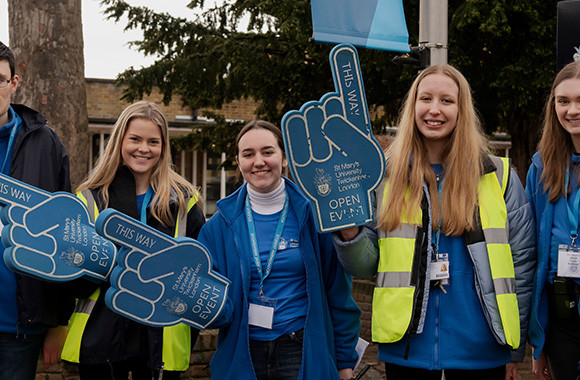
Thinking about whether St Mary's is the right place for you? Come and visit it us on campus.
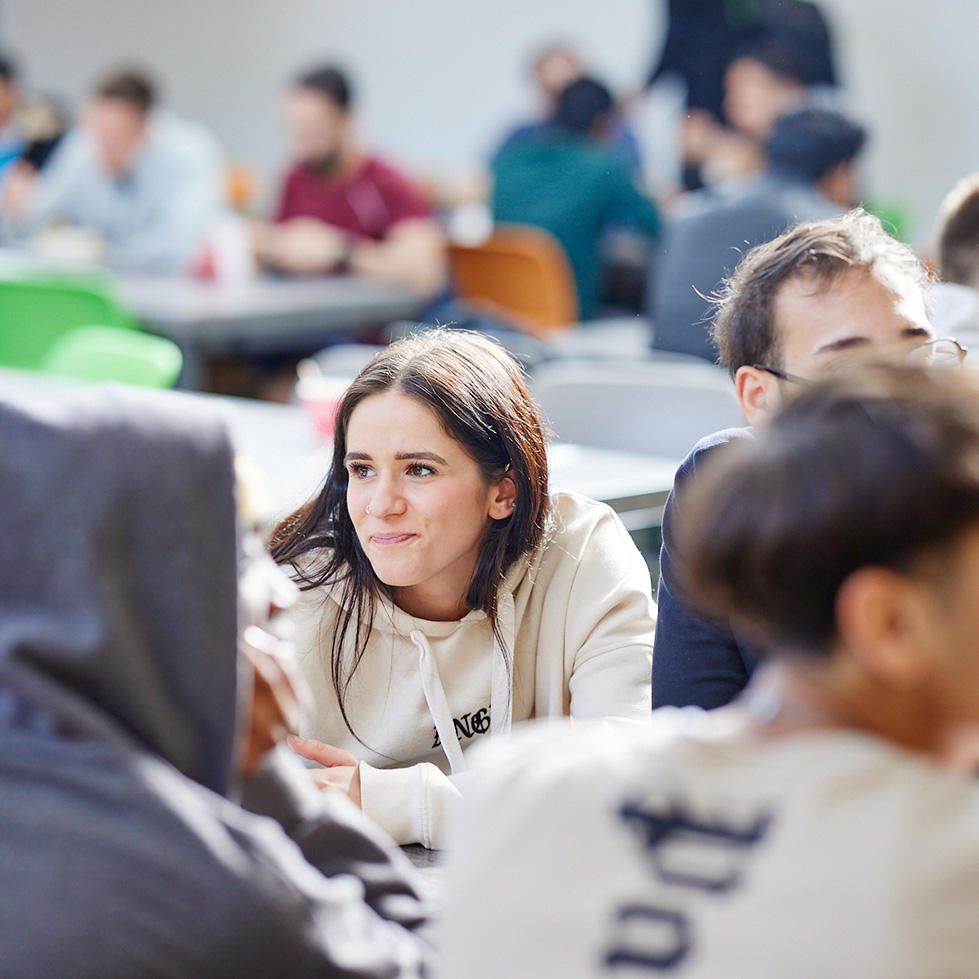
Find out more about the extensive support system available to you at St Mary’s.
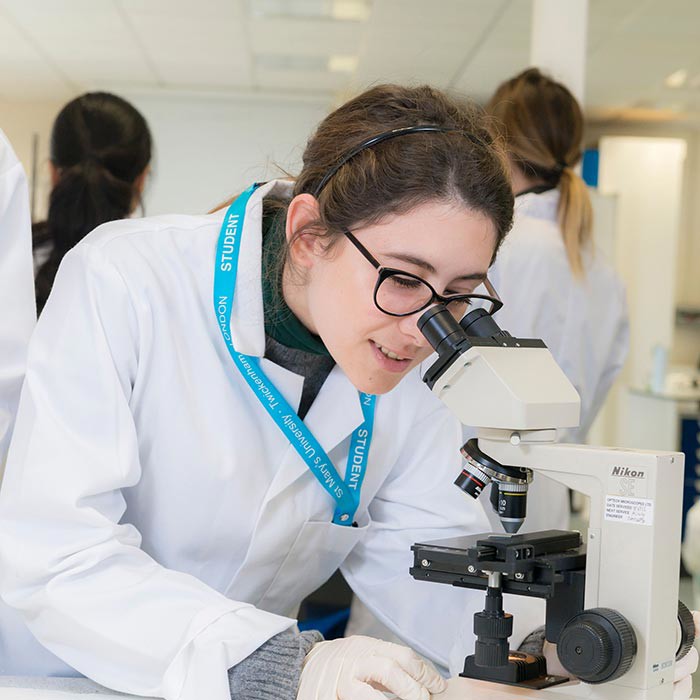
Discover the many areas in which our academies are currently researching.

Discover what life is like on our London campus.